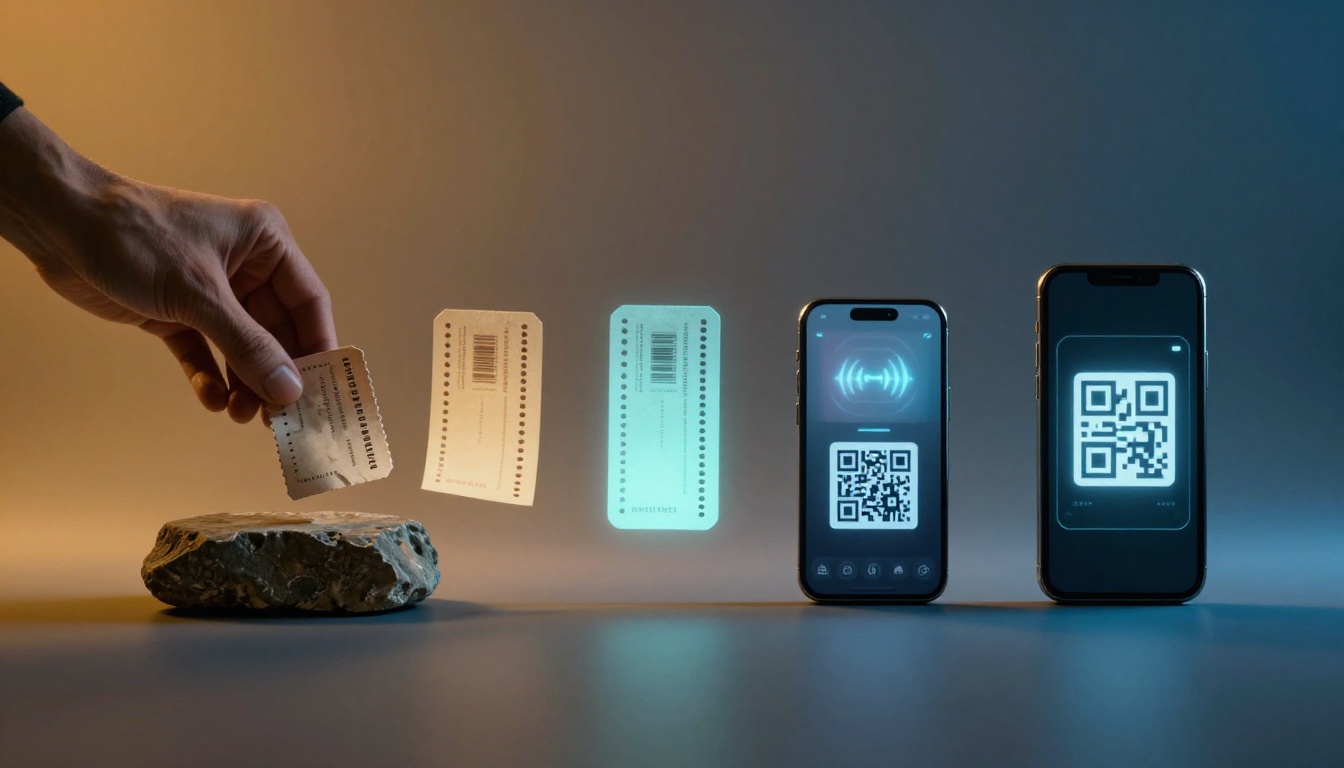
You remember the old ritual. You waited in line, clutching a paper ticket, praying your show time didn’t change. These days, you tap your phone and a gate scans your entry in seconds.
Ticketing systems have changed for one main reason: humans want less waiting and fewer mistakes. Event teams want the same thing, plus better fraud checks and smoother access.
Understanding how ticketing evolved helps you spot what’s real in 2026, and what’s just marketing. Next, we’ll start with ancient tokens, move through paper stubs and holograms, then look at computers, the internet, and mobile apps, and finish with AI and identity-based entry.
Simple Markers in Ancient Times
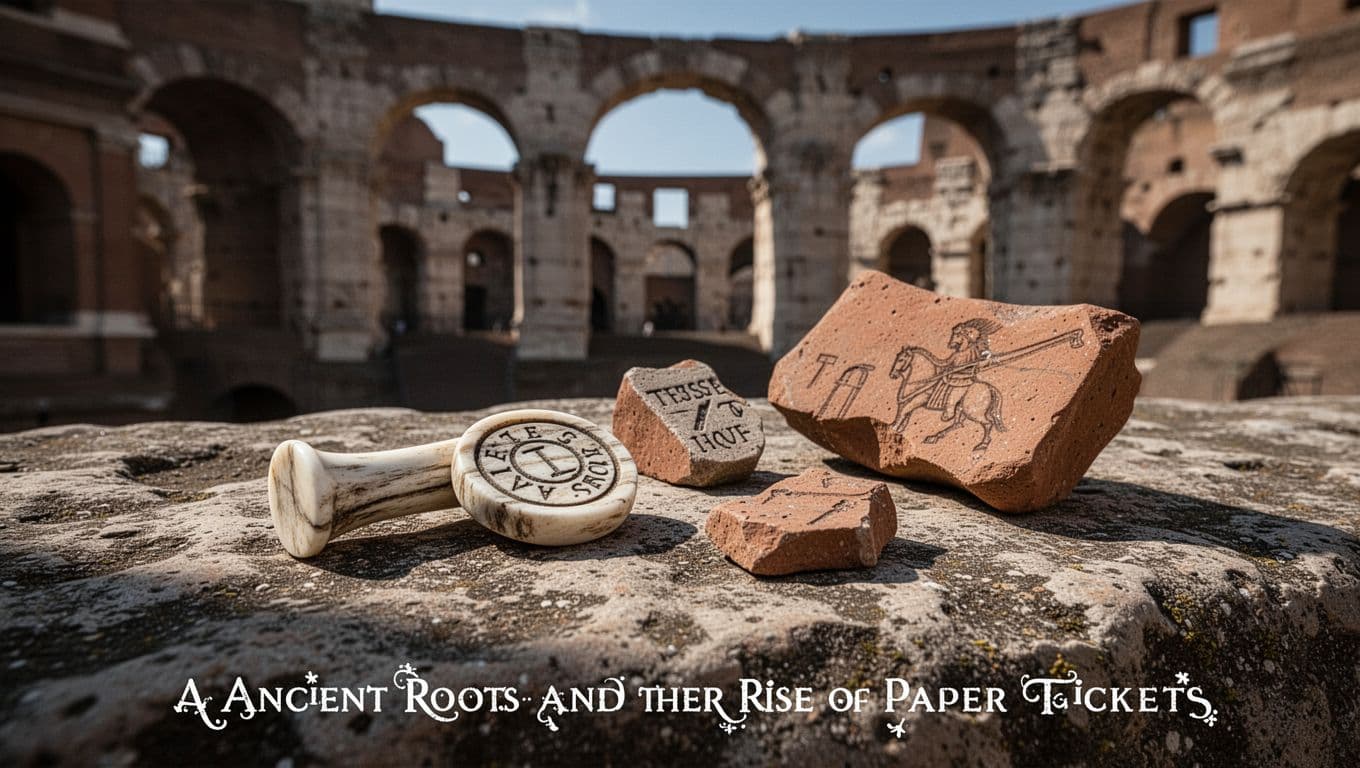
Long before “tickets” looked familiar, people used small objects to manage crowds. In ancient Rome, entry often relied on tesserae (small tablets) and other physical markers. You’d get something that proved you belonged at a specific event.
Some early evidence suggests pottery shards served as rough ticket stubs. They could include simple details for the holder, like seating or a pass category. Gizmodo covers this idea and explains why shards make sense as lightweight, collectible entry tools. See pottery shards as ticket stubs.
At venues like the Colosseum, organizers needed fast ways to control entry. That’s where physical markers helped. They acted like a bouncer’s “yes” in object form. Even if the system was imperfect, it still reduced chaos.
Meanwhile, other Roman-era methods also show up in historical writeups, including how tickets supported crowd flow. For a closer look at how visitors got admission at the Colosseum, check tickets to the Colosseum.
Still, early ticketing wasn’t a clean machine. There wasn’t one universal design. Trust and local rules mattered. In many cases, the “system” was just what the gate staff could check quickly.
In other words, the goal was the same then as now: prove you should enter. The tools simply changed with technology.
Paper Takes Over in the 1800s and Beyond
Then came paper, and it changed everything. Paper tickets made it easier to print details like seat sections and show rules. They also scaled well. If you can stamp it fast, you can sell to thousands.
In the 1800s, paper ticket systems expanded across theaters and sports. You’d see stubs for record-keeping, plus designs that made tickets feel “official.” Some cities and venues even used unusual token formats before paper fully took over, which helped manage repeat customers.
Later, some ticket formats got more decorative, almost collectible. You’d spot bold borders, fancy printing, and novelty shapes. Even in the middle of the 1900s, many venues wanted tickets to look unique, partly for branding and partly for easy spot checks at the gate.
Security also became a bigger issue as crowds grew. By the 1970s, venues used anti-fake features like holograms to make counterfeiting harder. The move was simple: if a fake can’t pass a quick visual check, fraud slows down.
You can also see how paper ticket history ties into modern digital trends. Ticketing providers often reuse the same core logic: assign seats, track entry, and keep a clean audit trail. For a history of the paper era, including how tickets evolved in design and handling, read the history of paper tickets.
Here’s the key takeaway from this period. Paper tickets weren’t just about convenience. They gave organizers a way to standardize entry and reduce arguments at the door.
That standardization mattered later, when computers and the internet started building on the same seat and admission concepts.

First Electronic Booking Hits Broadway
Computers didn’t kill ticket stubs overnight. But they changed the math behind ticket sales.
By the late 1960s, some venues and ticketing operators began using electronic reservation systems. Broadway is often cited as an early target because shows had tight schedules and high demand. One well-known reference is Ticket Reservation Systems (TRS), which started selling for Broadway around 1967. With electronic reservations, seats and availability could update faster than paper ledgers.
However, early systems had limits. Venues often still needed human workflows at box offices. Also, electronic booking didn’t instantly mean “no paperwork.” In many cases, you still picked up printed tickets.
So, fans gained speed, but they didn’t gain full digital control yet. That’s why the shift felt like a trade. You moved from line waiting to booking rules, then to pickup processes.
Fees were part of the early story too. Electronic sales often came with added costs, partly for the new service model. That didn’t stop adoption, but it made people pay attention to how tickets were priced and sold.
Even so, this era did something important. It proved that ticketing could be data-driven. Once seats became numbers in a system, the door opened for faster entry and bigger ticket volumes.
Ticketmaster Emerges as a Giant
As electronic booking spread, competition got intense. Some ticketing companies led for a while, then got overtaken as bigger platforms expanded.
One example is Ticketron, a computerized ticketing provider that operated from the 1960s until 1990. Over time, it lost market share as Ticketmaster grew. If you want a clear timeline of Ticketron’s role, see Ticketron on Wikipedia.
Then Ticketmaster’s scale started to matter. It helped standardize how tickets were reserved, printed, and processed. It also brought a stronger push into national distribution.
By the late 1990s and around 2000, barcodes began appearing more widely. Barcodes made entry checks faster because staff could scan instead of manually compare details. As a result, lines at gates became shorter, and events could handle more attendees.
In many venues, this changed the feeling of going to a show. Instead of “wait and hope,” fans got “scan and move.”
Here’s a simple way to compare the big shifts:
| Era | Ticket format | How entry got faster | What still caused friction |
|---|---|---|---|
| Ancient | Tokens, shards | Basic proof of eligibility | Slow checks, limited standard rules |
| Paper boom | Stubs, printed seats | Staff reviewed physical tickets quickly | Counterfeits and hard-to-verify paper |
| Electronic | Reservations + printed output | Availability updated faster | Pickup steps still existed |
| Barcode entry | Paper with scans | Gates confirmed tickets in seconds | Ticket bots and resale disputes |
The pattern is clear. Each upgrade reduced a specific bottleneck. Sometimes it was security. Sometimes it was time. Often, it was both.
The Internet Opens Doors to Home Buying
The 1990s brought a new promise. You could buy tickets from home, without driving to a box office. That mattered because paper lines weren’t just annoying, they also limited who could buy.
Ticketing online also changed the way event organizers planned. With home buying, organizers could reach people outside their local area. It also made marketing tie-ins easier, since online pages could match tickets to audiences.
In the early-to-mid online era, print-at-home tickets became a common approach. Fans bought online, then printed their tickets to use at the gate. This reduced the need for will-call pickups, but it still relied on paper.
Meanwhile, new platforms started to fill gaps. Some focused on self-service events and smaller venues. Others supported batch sales, seat maps, and event pages.
Eventbrite became a well-known name during this time, partly because it made ticket creation feel more accessible. For more context on how the modern ticketing ecosystem formed, see the evolution of the ticketing ecosystem.
Still, the early internet era had a problem that never went away: fraud and scalping pressure grew with demand. When buying becomes easier, so does bot buying.
That’s why later mobile ticketing wasn’t just about comfort. It became about stronger controls, faster verification, and better data for anti-fraud work.
Phones Put Tickets in Your Pocket
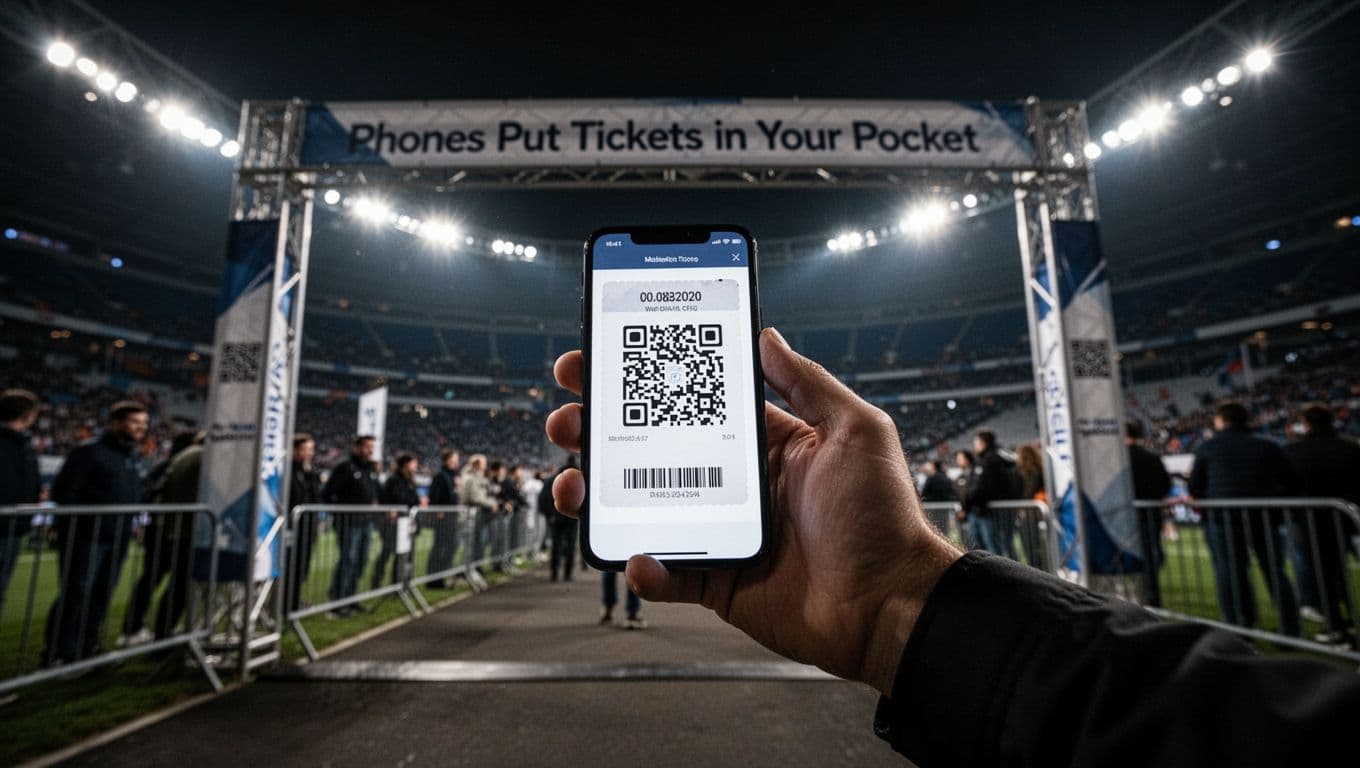
Once smartphones took off, ticketing moved with them. Instead of printing a ticket, you got a scannable code on your phone. Entry staff could scan the QR code or barcode and let you through.
In many cases, the phone ticket didn’t just copy the old paper workflow. It changed it. For example, organizers could update ticket status, handle transfers more cleanly, and confirm validity closer to event time.
Smartphones also made tickets feel personal. Your ticket lived in an app that you already used daily. Then digital wallets helped replace passwords and reduce “where’s my ticket?” stress.
As a result, gate staff needed fewer steps. Instead of “paper in hand, compare details,” it became “scan and verify.” That’s why you noticed shorter lines and faster entry.
Also, the hardware shift mattered. Near-field communication and secure chip features made mobile entry harder to forge. Even when screenshots happened, systems improved to catch duplicates and invalid states.
The overall change feels simple from the outside. But inside the venue, it’s a big operational update.
And that brings us to the future. If phones reduced friction, what happens when ticketing starts matching identity directly?
Smart AI Makes Ticketing Personal and Secure
By 2026, AI helps ticketing feel less like a transaction and more like a managed service. It can sort requests, detect patterns, and respond faster.
In practical terms, AI can help classify customer messages and route them correctly. It can also flag when something feels off, like repeated seat changes, unusual refund requests, or signals that match known bot behavior.
Some systems even use AI chat features to handle common tasks. For example, a ticket app might guide you through a refund option or help switch seats, without a long wait.
AI can also assist operations behind the scenes. It may help send smarter reminders, manage ticket timers, or split customer emails into the right support threads. That matters because event teams get crushed close to show time. When tickets start moving, customers need quick answers.
Then there’s pricing. AI can forecast demand and support dynamic pricing models, where prices adjust based on demand. Done well, it can reduce the chaos of sudden sell-outs. Done poorly, it can upset fans. So organizers keep a close eye on the balance.
The win is speed and accuracy. The risk is confusion if pricing changes too often. That’s why the best systems pair AI decisions with clear policies and customer-friendly messages.
Blockchain Fights Fakes with Digital Ownership
Blockchain ideas enter ticketing with one big goal: make tickets harder to fake and easier to verify.
In many proposals, a ticket becomes a unique token. That token can represent ownership and move under rules set by the official platform. In theory, that reduces fake tickets and can also improve resale controls.
In 2026, blockchain still doesn’t replace every ticket. But it shows up more often as a security layer, especially for festivals and special access models.
Ticketmaster’s testing is a good real-world reference point. From 2023 onward, it tested blockchain NFTs mainly for gated access and collectibles, not as a full replacement for standard tickets. Reports from that period describe token-gated sales with real conversion results for specific events. By 2026, NFT-style perks appear more common, even if “NFT equals a normal ticket” is still not the default.
So think of blockchain as a lock, not the whole door. It adds verification power, but it still needs a strong ticketing system around it.
And as with paper, the core job never changes. The ticket still proves permission. It just does it with better cryptography instead of glue, ink, or holograms.
2026 Innovations Like Facial Scans and Virtual Worlds
Biometric entry is rising in the U.S. A growing number of venues test contactless gates using facial recognition. The idea is simple: match the person at the gate to the ticket holder, which cuts fraud and speeds up entry.
In addition to speed, biometric checks can help stop scalpers and repeat-entry scams. It can also reduce the “show your ID and talk to staff” steps, especially when volume spikes.
If you want a focused look at how biometric entry and AI surveillance fit into event security, read biometric entry and AI surveillance in 2026.
But this era adds a new question. How do organizers protect privacy and handle consent? Those policies will matter as much as the tech.
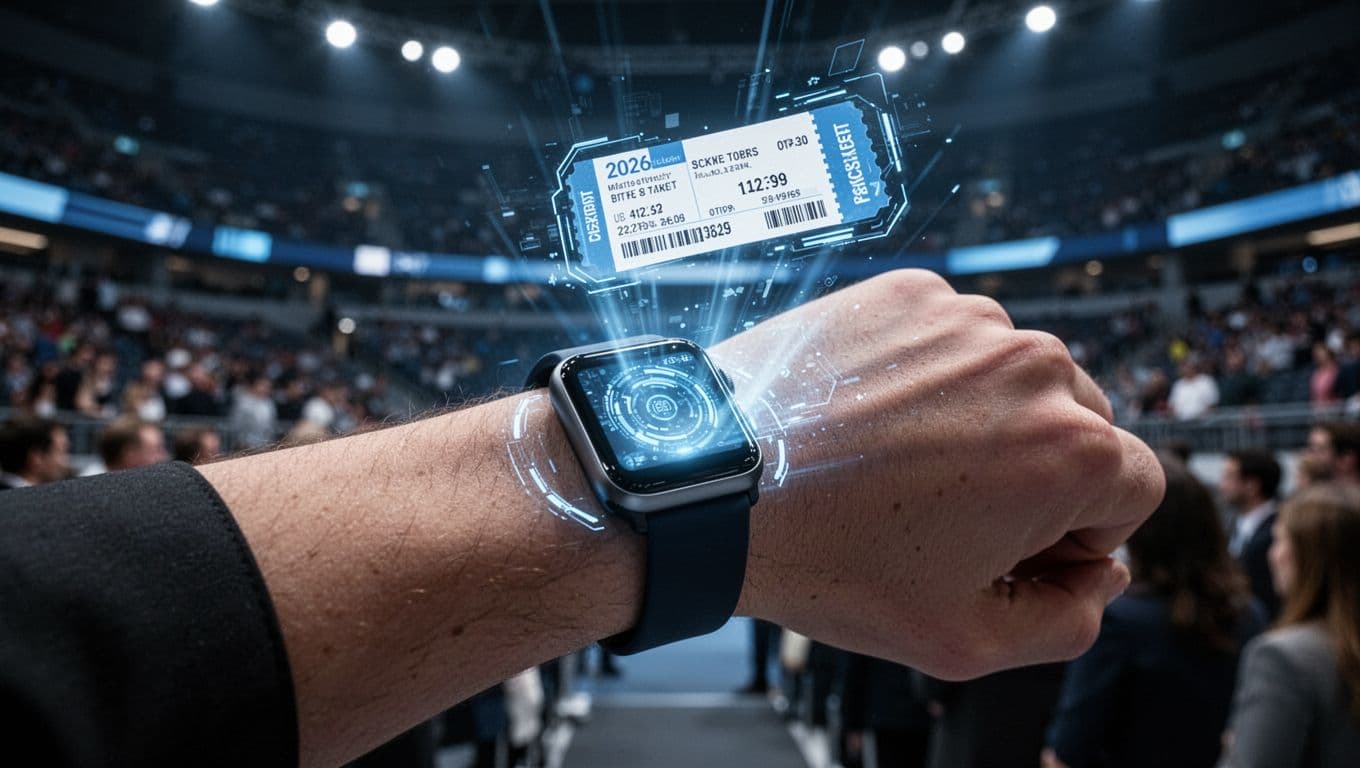
Meanwhile, identity features might also show up in other ways. Wearables could help with faster access, and virtual experiences might blend with live events. Some apps already treat tickets as portals, but 2026 pushes that idea further, with more “do more inside the app” behavior.
Still, the biggest theme is trust. Modern ticketing systems aim to verify the right person at the right time, without forcing fans to do extra work.
Conclusion
Ticketing has traveled a long way, from ancient proof tokens to phone scans and AI-assisted systems. Along the way, each upgrade cut a real problem: long lines, fake tickets, confusing entry rules, and slow support.
If there’s one lesson from the evolution, it’s this: better tickets aren’t just newer tech. They’re better verification, faster access, and fewer customer headaches.
So next time you’re tempted to complain about an app or a queue, remember how far we’ve come. What’s the strangest ticket story you’ve lived through, and which app or venue setup have you liked best?