You’re rushing to work, or you’ve got tickets for a park or concert, and you’re stuck asking one thing, will single-use tickets vs pass tickets save you money and time? In simple terms, single-use tickets pay for one trip or one entry, while pass tickets cover unlimited rides or multiple entries within a set time. If you’re only going once or twice, single-use usually wins. If you’ll make several trips in a day (or you expect re-entry), pass tickets usually cost less overall.
Next, you’ll see how these two options compare in real situations like transit, events, parks, and parking, so you can pick the best choice fast.
What Single-Use Tickets Really Mean for Your Next Trip
Single-use tickets are simple. You pay for one ride or one entry, then you move on. If you’re thinking, “Ever tapped your phone for a quick ride?” this is the ticket version of that moment. It’s built for the kind of trip that has a clear start and finish, not a full-day plan.
Because they don’t cover re-entry, single-use tickets keep your budget tight and your math easy. You’re not guessing how much you’ll use later. You buy what you need now, use it, and you’re done. In other words, they work like a paper umbrella. Handy for a specific moment, not meant to last all season.
What a single-use ticket covers (and what it doesn’t)
A single-use ticket usually covers one transaction: one ride on transit, one admission to an attraction, or one entry into a venue area. Often, it also has rules that limit when and how you can use it, especially around transfers.
Here’s what to expect most of the time:
- One ride or one entry: You can use it once, then it expires for that purpose.
- No re-entry: After you exit, you generally cannot come back on the same ticket.
- Limited transfer window: Some systems allow a short time window for transfers.
- No “add-on” time: You don’t get extra minutes or extra entries beyond the ticket rules.
Think of it like a museum wristband that you get for one visit only. You can enjoy the exhibits during that visit, but you can’t leave and return later.
On public transit, the key detail is whether the ticket counts only as “entry into the system” or also as “permission to transfer.” For example, in New York City, the base fare covers a single subway or local bus ride, while fares for express buses are priced differently. You can also find official fee rules through the New York City passenger tariff.
How you buy single-use tickets (apps, machines, stations)
Buying single-use tickets is usually quick, even when you’re in a hurry. Most systems let you purchase them at station machines, through the agency app, or at retail partners where available.
In practice, it often looks like this: you arrive at the stop, check your route, then buy the exact ticket for that trip. You then tap, scan, or insert the ticket. After that, you focus on the ride, not the fare.
Common buying options include:
- Fare vending machines at stations: Ideal if you want cash or quick in-person purchase.
- Tap-and-pay cards or phones: Works like “single ride” credit when your system supports it.
- Mobile apps: Useful if you want to plan while you’re en route.
- Tickets at customer service windows: Helpful when you need an explanation.
If you’re in Chicago, the agency publishes clear guidance on buying fares in person and through common channels in its CTA how-to for buying fares. Using official steps matters, because single-use rules can vary by route type and payment method.
Pricing reality: what $2.50, $3.00, and “one ride” actually mean
Single-use tickets sound small, but they add up fast if your plan changes. The good news is they’re usually easy to price in your head because they match one specific ride.
For a concrete example, in San Diego, many adult bus and trolley rides cost $2.50 for a single ride. However, some routes can cost more, like rapid express routes and rural services. If your day includes one bus hop, that’s exactly where single-use fares shine.
In New York City, the base fare for a single subway or local bus ride is listed as $3.00. If you buy a Single Ride ticket rather than using the usual tap payment method, the Single Ride ticket price is shown as $3.50. Express buses cost more per single ride, so it’s smart to match your ticket to your route type.
Here’s the practical takeaway: single-use pricing is like ordering a single drink at a café. You pay once, you get what you ordered, and you don’t regret it later unless you keep coming back for more.
You can also find fare comparisons in studies that review single ticket prices and monthly passes across cities, such as public transport fare comparisons in big cities. Use these for context, then check the exact fare rules for where you’re traveling.
If you expect stops, re-routes, or side trips, single-use can get pricey. If you expect one clean trip, it’s usually the simplest choice.
When single-use tickets are the smart pick
Single-use tickets fit best when your plan is low-risk. You know where you’re going, you expect one entry, and you won’t need to come back again.
They’re usually a great match for:
- First-time visitors who just need one or two rides
- Quick errands that require a single transit hop
- Event days when you enter once and leave after the show
- Parks or attractions when you only plan one visit per ticket
- Parking garages when you want “in and out” pricing
Picture planning a trip to an aquarium. If you’re going once, enjoy it, and then head home, a single entry ticket fits. But if you’re meeting friends later and want to come back, a pass or a multi-entry option might make more sense.
Also, think about how often you’ll transfer or exit. Single-use tickets can still work with transfers, but rules may limit the transfer window. If your route depends on exact timing, confirm the transfer policy before you buy.
Common gotchas to watch before you buy
Single-use tickets are easy to use, yet a few details catch people off guard. Most surprises come from re-entry limits, route differences, or transfer timing.
Watch for these common issues:
- No re-entry after you exit: You can’t “pause” your day and reuse the ticket later.
- Wrong fare for the route type: Express service can cost more than local service.
- Transfer window confusion: Some systems allow transfers within a short time limit.
- Admission boundaries: Some events count each entry point, not your overall time inside.
If you’re planning around a time-sensitive day, single-use tickets can feel like a straight-line path. Still, if your plans bend even a little, that straight line can turn into extra stops and extra costs.
Pass Tickets Unlocked: Unlimited Access Explained
Pass tickets are built for days when you’re not just going once. Think of them like an “all-you-can-ride” wristband, but with smarter rules. In most systems, a pass gives you unlimited rides or entries during a set time, like a day, week, month, or even a season.
So instead of counting rides and double-checking every extra fare, you can plan with less stress. You swipe in, you go, and the pass handles the rest. In other words, pass tickets benefits show up fast when your day grows.
Here’s what makes a pass ticket different in practice: it typically follows a time window, it may work across zones, and it often includes perks like free transfers. As a result, it can feel like you’re paying for flexibility, not just movement.
What “unlimited” usually includes (and what it might not)
When a pass says “unlimited,” it usually means you can use it as many times as the rules allow. Most of the time, you can enter and exit multiple times without paying again. However, systems still place limits.
For example, many transit passes cover travel on the same network or within specific zones. If you ride outside that area, you may need an extra ticket. Also, some passes exclude certain routes, premium services, or special event trains.
Here are common ways unlimited access is defined:
- Time window rules: Your pass starts when you activate it, then runs until the end of the day or the set period.
- Network limits: You can ride on most lines, but not every vehicle in the system.
- Entry limits: For events or parks, unlimited can mean unlimited entries through the same venue rules.
- Reservation rules: Some high-demand sites still require a reservation, even with a pass.
If you want a real-world example, Metrolink often describes passes and fares with free transfers to many local providers. You can see those details in the agency’s ticket information at Metrolink ticket types and transfers. That kind of policy is where “unlimited” starts to feel practical.
Unlimited access is great, but the fine print usually lives in zone coverage and allowed services.
How pass tickets cover zones, networks, and ride types
Pass tickets usually work because they match how riders actually travel. Most people move across a map, not in a straight line. Because of that, pass pricing often depends on where you start and how wide your coverage is.
In many transit systems, coverage falls into two big buckets:
- Zone-based passes
You buy a pass that covers Zone 1, Zones 1 to 2, and so on. Then your rides stay valid as long as your trip stays within those zones. - Network-based passes
The pass covers the whole system, or it covers a named set of routes. For example, it might include all local trains and buses, but not special express service.
Meanwhile, some passes also treat ride types differently. Local and express might have separate rules. In addition, weekends might be treated as a broader “ride anywhere” window than weekdays.
To see how Metrolink frames fares by where you travel, check Metrolink fares and pass details. It explains how fare products and ticket types connect to trip rules, which is the same logic pass owners use to plan.
Pass tickets pricing: day, monthly, and seasonal value
Pass tickets usually feel worth it when you expect repeat use. If you’ll ride a few times, the pass can still win. But it becomes truly satisfying when your schedule is packed, and your plan could change.
Here’s the typical way pricing makes sense for riders:
- Day passes: Best for one busy day, like a city hop plan or a long trip to a park area.
- Monthly passes: Best for daily commuting, school schedules, and regular errands.
- Season passes: Best for repeat visitors, like families going back all summer.
In the US, national parks can work similarly for visitors who want many entries. For example, the National Park Service explains that an America the Beautiful pass can help frequent visitors save money on entrance fees. The overview is here: NPS entrance pass options. Even though park access rules vary by site, the value idea stays the same: you buy once, you visit more.
Japan rail passes: a travel-friendly example of unlimited-style value
If you’ve ever considered train travel across multiple cities, Japan rail passes are a familiar example of how pass tickets can simplify planning. In many cases, you pay a fixed amount for a set number of days, then ride many times during that window.
The key advantage is predictability. You don’t keep asking, “Will this extra stop cost me?” Instead, you plan routes like a map, not like an expense report.
That same feeling can show up in other transit passes too. Once you’ve bought the pass, you stop micro-calculating every transfer. You can also choose stops based on what you want to see next, not only on what you can afford.
Still, confirm coverage for any system you use. Express routes, private lines, and special services may not be included. As a result, you get the value when your trip matches the pass boundaries.
The biggest pass-ticket benefits for real riders
Pass tickets benefits are about more than saving dollars. They also reduce mental load. You stop worrying about extra fares, and you focus on the day in front of you.
Most riders feel these benefits in three ways:
- More rides without “fare anxiety”: You can take the train again, even if your plan changes.
- Less time checking rules: You follow one pass rule set instead of counting single rides.
- Better flow with transfers: Many passes include transfer perks for smoother routing.
Also, passes often fit group travel. If everyone plans to ride repeatedly, one pass can cover a lot of movement. That makes logistics easier at the start of a trip, especially for families.
So, when should you lean toward a pass? If you expect several trips in the same day, or you expect to re-enter a park or venue, a pass turns your schedule into something you can enjoy. You pay once, then you move as much as you want inside the rules.
Single-Use vs Pass: Spot the Differences in Everyday Spots
Once you see the pattern, choosing between single-use and pass tickets gets simple. Single-use tickets act like a one-time key, they open one door (one ride, one entry). Pass tickets act like a day pass wristband, they keep opening doors for as long as the time window lasts.
Below, you’ll see how the same basic choice plays out in the places you hit most: transit, events, theme parks, and parking.
Public Transportation Showdown
Transit is where the difference is easiest to feel. A single-use ticket fits 1 to 2 rides, then you’re done unless you buy another ticket. Meanwhile, a pass usually gives you all-day unlimited buses and trains (and sometimes better transfer rules) inside the pass window.
Here’s a clear example from San Diego MTS:
- Single ride: $2.50 for most adult trips
- 1-day pass: $6 (standard adult), with reduced options too
- Transfers: a single ride typically includes up to 2 hours of transfers when you pay by card or app, not when you use cash
Then look at Metrolink for a weekend pattern:
- Weekend day pass: $10 for unlimited rides all day Saturday or Sunday
So how do you spot the winner fast? Do one quick mental test. If your plan includes multiple trips, the pass stops being “extra” and starts being the default.
For instance, if you take 5 single rides on a $2.50 fare:
- 5 singles = $12.50
- 1-day pass = $6
In other words, the pass saves you $6.50 in this simple scenario.
One more detail matters: apps sometimes handle fare logic differently than machines. Even when pricing is the same, auto-cap features (automatic upgrades after certain rides) may or may not exist. In San Diego MTS, current info does not point to an automatic day-pass upgrade, so you should still check the pass price when your day grows.
Events and Festivals Face-Off
Events follow the same rule, but the “one-time key” is your entry permission. A single-use event ticket typically works like this: one entry, no re-entry. You come in, you enjoy, then you’re out for good.
Passes for festivals and events usually work differently. Instead of one entry, you get multi-day unlimited access. That means you can go in, step out, and return during the pass window.
Pricing often makes this shift obvious. A real-world way to think about it:
- Single-day: around $20 to $50 (varies by festival and day)
- Multi-day pass: often around $100 for a 3-day event (sometimes more, sometimes less)
Now do the “5-ride math” equivalent for festivals. If you attend two days and singles cost $30 per day, you spend $60. If a 3-day pass is $100, it might still be worth it only if you plan to use that third day too. If you skip one day, the single-day tickets might win.
Also watch the re-entry rules on single-day tickets. If the venue charges for bag checks, shuttle rides, or parking each time you leave, “no re-entry” becomes more expensive than the ticket price alone.
Theme Parks Battle
Theme parks are where passes often become a no-brainer, as long as you plan more than once. With theme parks:
- Single-day entry is typically one use per visit day
- Season passes usually cover unlimited visits during the season
- Higher tiers often include perks like parking discounts or food and merch benefits
In California pricing examples, the spread is big:
- Single-day tickets often land around $80 to $120, depending on the park and busy days
- Annual/season passes can run about $200 to $500 per year, depending on tier and which park benefits you want
Here’s the easy way to decide. If you think you’ll visit at least a few times, the season pass stops being “a big payment” and turns into “a price per visit.”
For example, if single-day tickets average $100, then:
- Two visits: $200 (equal to the low end of many season-pass tiers)
- Three visits: $300 (where many passes start to feel clearly better)
Before you buy, scan for what the pass truly includes. Some annual products cover one park, while others bundle two parks and add parking perks. That difference alone can swing the value even if both options look similar on paper.
Parking Lot Comparison
Parking is the surprise category, because single-use parking looks cheap until you move your car more than once. Typically, you’ll see:
- Hourly single-use parking: around $5 to $20, expiring quickly
- Daily or monthly passes: often around $15 per day (daily) and about $100 per month for unlimited in-and-out (varies by city and garage)
The “spot the difference” moment is when you realize your day won’t be one-and-done. If you leave and return later, hourly pricing starts stacking fast.
Here’s a simple check. Suppose hourly parking averages $10 per hour and you move twice:
- 3 hours on Day 1 = $30
- 3 hours later = $30
- Total for two sessions: $60
If there’s a daily pass near $15, you save a lot by buying time instead of minutes.
In short, hourly tickets work best when you’ll stay put. Passes work best when your schedule changes, you need re-entry, or you want parking that doesn’t punish you for running errands.
Pros, Cons, and Smart Ways to Choose Between Them
When you’re stuck deciding between single-use vs pass tickets pros cons, think of it like grabbing coffee. A single drink is easy to justify. A coffee card makes sense only when you plan to keep ordering. The right choice depends on how many times you’ll actually use it, plus the rules that control re-entry, zones, and included services.
Here’s the bottom line before you crunch numbers: single-use tickets win for 1 to 2 trips, while passes often win at 3 or more (especially when you expect re-entry or multiple stops).
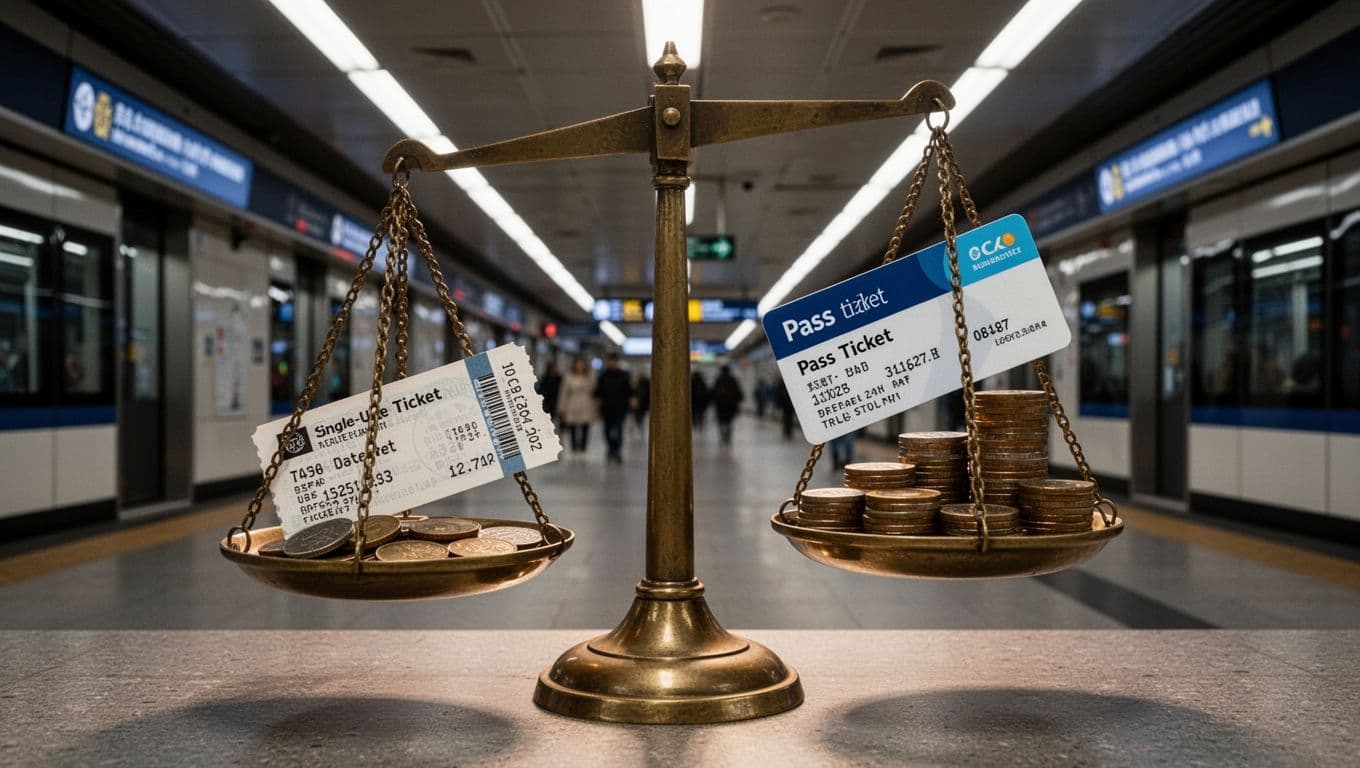
Single-use tickets: the case for rare trips
Single-use tickets are simple, low-risk, and usually cheaper upfront. You pay for one ride or one entry, then you move on. Because you’re not committing to a bigger product, you avoid the awkward feeling of paying for “unused value.”
Still, singles have a catch. Each time you use the ticket, you pay again. So the cost can climb fast on busy days, multi-stop days, or events where you might enter more than once.
Here are the main single-use vs pass tickets pros cons for singles:
- Pros
- Lower upfront cost, great when you only need one trip
- Easy to understand, buy once, use once
- Flexible plans, you can change your mind without “wasting” a pass
- Good for one-off events, where you enter and leave once
- Cons
- Costs add up quickly if your day grows
- Re-entry limits can turn “one visit” into a surprise bill
- Route or zone mismatch can force you to buy a second fare
- Transfer rules may be tighter, depending on the system
If you want a real-world way to sanity-check value for attractions, many travelers use a “cost per visit” mindset instead of only staring at the sticker price. That approach shows up in guides like Best Florida Passes for Theme Parks because it focuses on actual usage.
Pass tickets: when the hassle drops and value shows up
Pass tickets reduce friction. You stop recalculating fares every time you change plans. Also, many passes include rules that make movement smoother, like broader transfer coverage and multiple entries during the pass window.
However, passes can bite if you underuse them. If you buy a day pass and only ride once, you essentially paid for a seat you didn’t sit in.
Here’s what the trade-off usually looks like:
- Pros
- Better value after 3+ uses, especially for round trips
- Multiple entries for parks and venues during the allowed window
- Less mental math, you plan by time, not by fare
- Often better transfer flow, so you do not get stuck buying extra
- Cons
- Higher upfront price, even if you end up using only a little
- Zone or network limits still apply
- Some services require extra add-ons, reservations, or separate permissions
- Rules can be strict about when the pass is active
That “did I use it enough?” question comes up often in pass reviews too. For example, a common lesson from Is a Go City Pass Worth It? is that value depends on matching your plan to what the pass actually covers.
Smart break-even math you can do in your head
Break-even math is where the decision stops feeling like a guess. You just compare the pass price to the cost of single uses.
Use this quick formula:
- Single-use cost per trip = what you pay each time
- Pass cost = what you pay once
- Break-even rides = pass cost ÷ single-use cost
Let’s make it concrete with the latest US transit examples available right now.
NYC MTA: when the day pass starts paying off
In NYC, the single ride ticket is often higher than tapping with a card, and express rides cost even more. Based on the most current numbers reported for the system, here’s the break-even idea.
- If a single ride costs about $3.50, two rides totals $7.00.
- A NYC day pass can be around $6.30 on weekdays (based on current pricing logic).
So, you usually hit value quickly.
Here’s the quick comparison:
| System | Single-use price used for math | Pass price used for math | Break-even (approx) |
|---|---|---|---|
| NYC MTA (weekday logic) | $3.50 per single-ride ticket | $6.30 day pass | 2 rides |
| NYC MTA (weekend logic) | ~$3.50 or ~$3 per ride depending on fare type | ~$6 day pass | 2 rides (close) |
| San Diego MTS (typical values) | ~$2.50 per single ride | $6 day pass | 3+ rides |
| Chicago CTA (typical values) | ~$2.50 per single ride | $10 day pass | 4+ rides |
The takeaway is simple: if you expect multiple rides, passes tend to win faster than you think.
If you’re near break-even, check rules first. Zone coverage and transfer windows can change the outcome.
A quick decision guide (use this before you buy)
When you’re choosing in real time, you need a fast rule that still feels accurate.
Think of your day as either one-and-done or multi-stop. Then match the ticket style.
- Choose single-use if:
- You’ll make 1 to 2 trips
- Your plan is tight and you likely won’t re-enter
- You want to avoid paying upfront for unused value
- You’re using one service type (like local rides only)
- Choose a pass if:
- You expect 3+ trips, even if plans might shift
- You’ll likely move across multiple stops in one window
- You need re-entry (parks, events, parking with multiple visits)
- You want fewer pay moments and fewer fare surprises
A good way to phrase it: single-use is pay-per-lap, while a pass is pay-for-the-race. If you only run one lap, singles feel right. If you run many, passes make the day easier.
Tips that keep passes from feeling like a trap
Passes can still fail if you miss one rule. So it pays to do a quick check before purchase. Here are the most common “oops” moments and how to avoid them.
- Check coverage boundaries
- Look at zones, networks, and excluded routes.
- Confirm re-entry rules
- For parks and venues, exiting might mean a new charge unless re-entry is included.
- Watch for add-ons
- Some systems include most rides, then require separate fees for premium routes or services.
- Use your transit app smartly
- Many apps show whether your fare plan auto-upgrades or caps daily costs.
- If the app does not cap, a pass might still be worth it on schedule days.
If you want theme-park style examples, many guides break down whether multi-day passes beat single-day tickets using a “use case first” lens. That’s exactly what you should do when comparing single-use vs pass tickets pros cons for attractions. You can also compare the approach behind single-upgrade options in places like Disney, where paid “one-time” add-ons exist alongside multi-day products (for example, Lightning Lane Single Pass).
Example: the “Save $10” commute week scenario
Picture this: you commute for work, and you also squeeze in errands. If you ride 4 times per day, singles add up fast.
Say singles average $3.50 each and you ride 4 times each weekday.
- Singles per day: 4 × $3.50 = $14
- Singles per week (5 days): $70
Now compare a day pass that breaks even around 2 rides. Even if the pass is priced at about $6.30, you get a big swing:
- Pass per day: $6.30
- Pass per week: $6.30 × 5 = $31.50
- Rough weekly savings: $70 – $31.50 = $38.50
Your numbers will differ by city and route, but the idea holds. Once you cross the break-even point, the pass stops feeling like an expense and starts feeling like a refund plan.
2026 Trends Changing How We Buy Tickets
Buying tickets in 2026 feels less like “shopping” and more like letting the system do the math for you. Contactless apps now handle payment, caps, and best-fare rules, so you spend less time choosing and more time riding or entering.
Contactless apps and “tap to pay” become the default
In 2026, more ticket buying starts with a phone tap. Instead of hunting for exact change or a separate pass card, you use your card or digital wallet at the gate.
That shift matters because it changes how you think about single-use versus pass tickets. If your system can automatically find the best fare, you might not need to plan as carefully. For example, ORCA systems in the Puget Sound region rolled out tap to pay using credit and debit cards and digital wallets, including Apple Pay and Google Pay. You can see the details in ORCA’s tap-to-pay update.
Meanwhile, transit agencies keep modernizing fare collection, as this overview of fare collection trends in 2026 explains in plain terms: Fare collection trends for 2026.
Auto-upgrades and fare caps make pass value happen sooner
This is the biggest reason passes look better in 2026. Many riders now get pass-like benefits without buying a pass first.
San Diego’s PRONTO system is a clear example. It auto-upgrades you to a day pass once you hit the daily cap (for adults, it’s $6 max). So, if you started with single rides, you still end the day with unlimited rides under the cap. It’s a lot like ordering individual slices of pizza, then getting the “whole pie” price automatically once you eat enough.
So when single fares rise, auto-cap rules reduce the risk of buying wrong. You keep flexibility, but you still get the ceiling.
The best-fare system turns “single-use vs pass” into a question of how your app calculates the limit.
Parking and events get the same friction-killing treatment
Outside transit, the direction is similar. Parking keeps moving toward pay-by-plate and app-based payment, which makes “single-use parking” feel less strict and more adjustable. At the event level, more venues now expect app-based entry and smoother re-entry rules, so multi-day access and pass-style products can fit more naturally.
Rail perks also show up more often in bundled travel offers. Some programs pair rail tickets with hotel discounts or partner perks, so your “ticket purchase” can quietly become a package deal.
Your 2026 action tip
Before you buy anything, open your local transit and parking apps and check two things: whether they cap daily spend, and how re-entry works for the products you’re considering. Then pick single-use only if you’re sure you won’t hit the cap or need to come back.
Conclusion
You started with a simple question, single-use tickets vs pass tickets, and the answer still comes down to use. If you’ll ride once or twice, single-use keeps things simple and avoids paying for unused time. If you’ll make several trips in one day, a pass usually brings the better value and the less annoying math.
For most riders, the strongest payoff is the savings point. Once you hit the pass break-even rides, you also gain an easier plan, because you spend less time checking rules, re-entry, and extra charges. Also, with modern tap payment and fare caps, you can often keep flexibility while still protecting your budget.
Next step is practical. Check your city’s transit app today and plan smarter trips. Then pick the option that matches your day, one trip or many.