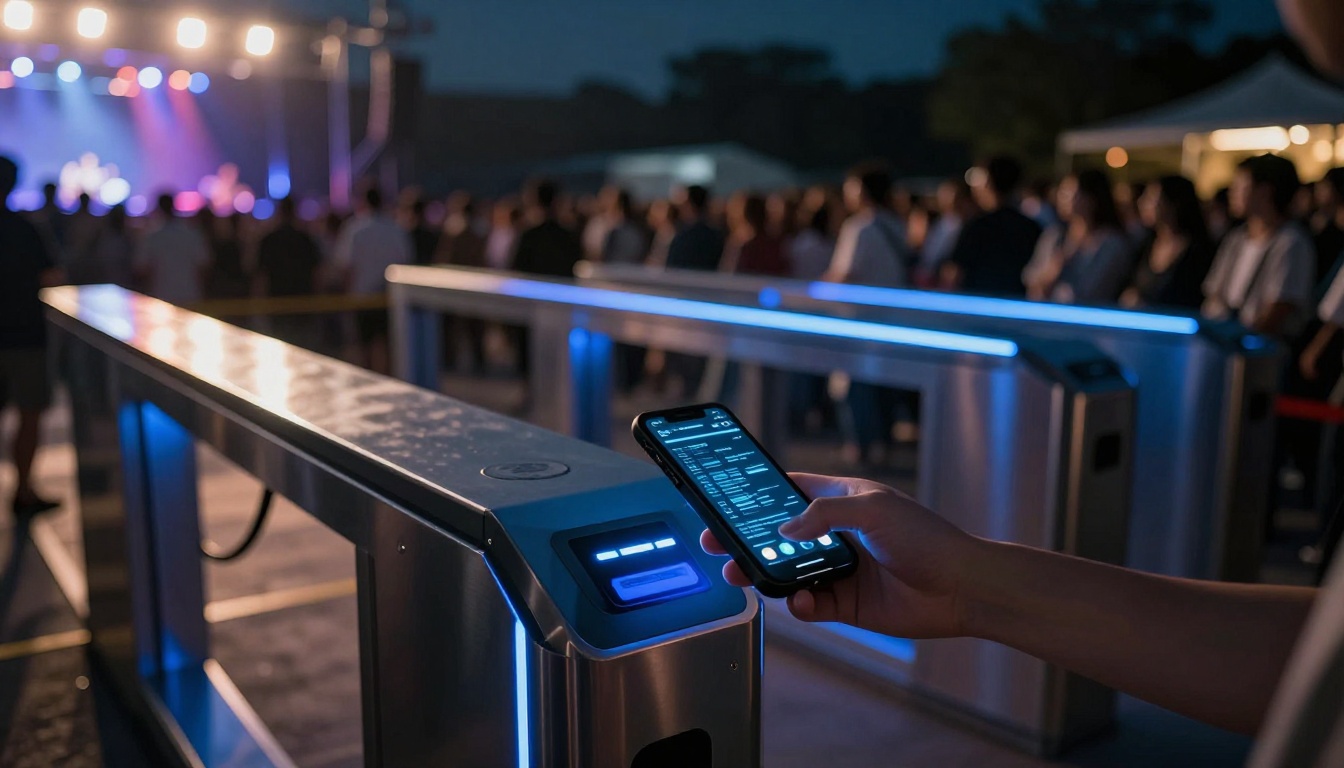
Ever tried to enter a packed concert and get stopped by one slow line? Now imagine that same gate system decides who gets in, when they can enter, and what happens if something looks off.
That’s why tickets matter for access control. A ticket isn’t just proof you paid. It’s a permission signal that helps venues manage entry, reduce fraud, and keep crowds from getting chaotic.
In 2026, more events rely on mobile tickets and contactless scans. Many also use smarter access rules, real-time crowd checks, and stronger anti-fake steps. The goal is simple: faster entry for fans, better control for organizers, and fewer security headaches for everyone.
So how do tickets actually do that behind the scenes, and what new tech is changing the way gates work right now?
How Tickets Make Sure Only the Right People Get In
At the gate, a ticket should act like a quick yes or no. The scanner checks your ticket, confirms you’re allowed in, and records your entry. Then you move on.
That routine might sound basic, but it solves a big real-world problem. If gates don’t track entry, people can share tickets, fakes can slip in, and lines can swell beyond safe capacity. Tickets for access control do the opposite. They make entry measurable.
Most venues use a three-part approach:
- Verify permission: the scanner checks that the ticket is valid and linked to your event.
- Record entry: once you pass, the system marks your ticket as used.
- Watch crowd flow: organizers can see counts in real time.
For example, when you approach a venue entrance, you might hear the familiar scan beep and see a green light. Meanwhile, a dashboard can show how full the venue already is. If numbers spike, staff can slow new entry. That’s how organizers prevent the “everyone rushes at once” problem and reduce the fights that happen when people think gates are unfair.
If you’ve ever seen someone argue with a staff member over a denied scan, you’ve seen what happens when permission is unclear. A good system reduces those disputes because the decision comes from the ticket data, not guesswork.
Some platforms describe this access control idea as turning devices into check-in tools, with features like ticket validation and attendance tracking. For a closer look at how venues structure check-ins, see smart event check-in access control.
Verifying Payment and Permissions Instantly
The first job of a gate scanner is simple: confirm the ticket is real and unused. You hold your ticket near the reader, and the system checks it on the spot.
Think of your ticket like a key. Not every key fits every lock. Even if two people have “tickets,” they might not have the same door rights. Some events also use access levels. For example, general admission and VIP entry often use different permissions. A scanner can confirm which rules apply to you.
Because the permission check happens at the entrance, staff don’t need to do long manual reviews. That means fewer slowdowns. It also helps protect staff from handling crowds with no clear info.
In 2026, many events expect mobile ticketing to handle most of the work. Surveys and event tech reporting in the US show that most people prefer buying and storing tickets on their phones. That matters because the scanner needs the ticket data quickly, not printed paper that might be smudged or out of date.
Stopping Duplicates and Fake Tickets Cold
The second job is stopping duplicates. If a ticket can be scanned multiple times, someone can sell it, share it, or try it at a different gate.
So access systems mark tickets as used after the first scan. After that, the ticket should fail on the next attempt. In practice, that blocks common abuse patterns, like handing one ticket to a friend or trying the same QR code at a new entrance.
Fake tickets are still a risk. However, stronger systems make it harder to copy anything that matters. Many modern platforms use encrypted ticket data so each ticket is harder to reproduce. Some also use blockchain-style verification concepts to add extra trust signals.
Also, some ticket designs include one-time or time-limited behavior. That way, even if a code gets captured, it can’t keep working for multiple entries.
Here’s the key takeaway for fans: when your ticket gets marked at scan time, you don’t have to argue with other people. The gate decision becomes consistent.
The fastest way to reduce gate fights is to make permission checks automatic and consistent.
Tracking Attendance to Keep Crowds Safe
Tickets also support safety. Not just “security theater,” but actual crowd control.
When venues can see attendance counts, they can manage capacity with more accuracy. That helps in everyday moments, like preventing entry lines from stacking up. It also helps in emergencies, because staff can spot sudden drops or surges.
Imagine a venue with two entrances. If one side fills up faster, staff can redirect people. If the venue gets too crowded, new entry can pause briefly. Then it resumes in smaller waves.
This matters because safety isn’t just about stopping bad actions. It’s also about controlling normal flow. Even good crowds can turn risky when density gets too high.
In 2026, event organizers increasingly expect data from ticketing and check-in systems. That includes real-time updates and live dashboards. As a result, they can adjust entry timing without waiting until the next manual headcount.
Ticket Tech Taking Over in 2026
If tickets are the permission, tech is the delivery system.
In 2026, ticketing and entry tools aim for one outcome: get people in smoothly, without losing control. That’s why you’ll see more mobile-first entry, plus contactless options like QR codes and RFID wristbands. You’ll also see biometric gates at higher-security areas.
One reason this trend keeps growing is user comfort. Nobody wants to stand at a gate fumbling for paper. Nobody wants repeated “scan again” frustration either. So systems focus on quick validation plus stable permission rules.
For a clear side-by-side look at the main access tech options in 2026, check out QR codes, RFID, or biometrics in 2026.
QR Codes: Pull Out Your Phone and Go
QR codes became popular because they’re easy. You already have the device that carries the ticket.
In many events, you scan your phone at the gate. The app can show a code that the scanner reads quickly. Then the system confirms validity and records your entry.
Because QR codes can work with local checks, some venues can keep moving even if internet speeds slow down. In other words, the gate might not need constant connection to verify the ticket status.
QR entry also fits modern crowd behavior. People already check their phones for schedules, maps, and updates. So the ticket stays in the same pocket of attention.
However, QR is not only about convenience. It’s also about contactless flow. Fewer shared surfaces mean fewer small hassles, and you avoid the “paper touch” problem at busy entrances.
RFID Wristbands for Totally Hands-Free Fun
RFID wristbands add one step of automation. Instead of scanning a code, you walk through a reader.
That’s why RFID works well for large festivals and venues where entry and re-entry happen all day. A wristband can also carry permission levels. For example, you might get one tier for general access, and another tier for VIP areas.
One practical reason venues like RFID is speed. When hands stay free, people don’t stop to line up a phone in the exact spot. They also avoid dropping a phone during peak moments.
Cost matters too. Reports and breakdowns on RFID hardware often note that wristbands can vary widely by materials and features, but mid-size events can land in a low single-digit dollar range per attendee for wristband options.
If you’re curious about whether RFID wristbands make financial sense in practice, see RFID wristbands worth it in 2026.
Biometrics: When Your Face Unlocks the Fun
Biometrics push access control into a new category. Instead of showing something, you become the credential.
Facial recognition gates can verify identity at entry. Fingerprints and other biometric checks can also appear in some settings. For VIP areas, biometrics reduce risks from shared badges and copied permissions.
The tradeoff is privacy. Many people want clear answers before they enroll. So venues typically ask for registration at purchase or ahead of time. Then they explain what’s stored and for how long.
When handled well, biometrics can still feel smooth. You walk up, the gate verifies you, and you keep moving. Still, if biometrics are used, communication matters. People should know what’s happening and why.
If you want to see how some security-focused event systems frame biometrics in 2026, look at biometric entry and AI security.
How Smart Tickets Ramp Up Security Without the Hassle
Security often gets blamed for making lines longer. But smart ticket systems try to do the opposite.
They use ticket data to reduce guesswork. That lets staff focus on the small number of cases that need extra attention.
In 2026, two themes show up again and again:
- Anti-fraud at the source (especially around ticket sales and resales).
- Safer entry flow (using tech to speed the normal case, and flag the rare case).
As a result, many venues aim for shorter lines without lowering scrutiny. They also work to keep scalpers out by making tickets harder to copy and easier to verify.
AI Screening That Spots Trouble on the Fly
Not every security decision should happen the slow way. AI can help by scanning more quickly and flagging issues early.
In some stadium reports, there’s growing talk about entry processes that feel closer to “airport fast” screening. The idea is to use smarter detection at gates, so most fans move through without delays. Only flagged items require extra review.
For example, a recent sports report discussed how fan entry could feel faster than older methods at a major US venue. You can read that coverage here: faster stadium entry like TSA.
This is where tickets and access control connect. If a ticket system knows the event, the permission rules, and the crowd count, screening can focus on actual risk rather than random delays.
Crushing Scalpers with Encrypted, Verified Access
Scalpers thrive on uncertainty. They count on copied codes, shared tickets, and last-minute confusion at the gate.
Modern access systems fight that with stronger verification. That includes encrypted QR tickets, real-time fraud alerts, and unique ticket signals that don’t copy cleanly. Some approaches also involve blockchain-related verification concepts to add more trust and make tampering harder.
Also, many platforms build in verified resale rules. That means buyers can trade tickets in ways that still keep the permission chain intact. Instead of “hope it works at the gate,” you get a clearer path to entry.
In practical terms, these protections help two groups:
- Fans get fewer rejected scans caused by bad actors.
- Organizers reduce staff time wasted on disputes.
So when people say “tickets are important,” they’re not just talking about money. They’re talking about control. They’re talking about safety. And they’re talking about keeping entry fair when thousands of people show up at once.
Conclusion: Tickets Turn a Crowd Into an Ordered Event
Back at that packed concert, the moment you scan and get in feels simple. Yet it’s powered by access control decisions. A ticket becomes permission, and tech turns that permission into secure entry.
In 2026, the biggest wins show up in two places. First, fans spend less time stuck at gates. Second, organizers get real-time safety data that helps them manage capacity and respond faster when needed.
If you’re planning to attend anything this year, check how tickets work for that event. Look for mobile entry options, and pay attention to any info about wristbands or biometrics. Then, when you arrive, expect smoother control and fewer surprises.
After all, when tickets do their job well, your entrance should feel like a start to the fun, not a barrier. So what kind of entry tech do you think you’ll see at your next big event?