
You can lose a dream concert night in seconds. One fan in my group bought “two great seats” after on-sale crashed. The tickets looked real, until the venue scanned them and nothing worked.
This is happening more often, because fake ticket scams keep scaling up. In recent reporting, nearly 5 million people buy fake tickets each year worldwide, and U.S. and U.K. losses keep climbing. Bots also move fast, snatching inventory and flooding resale markets with invalid listings.
If you want to avoid that sinking feeling, use a simple plan: spot the red flags, buy from trusted sources, and protect your payment. Here’s how to do it, step by step.
Why Fake Ticket Scams Are Exploding Right Now
Fake and invalid tickets aren’t just “bad luck” anymore. The pattern is getting clearer: scammers ride ticket demand, then use automation to overwhelm both buyers and ticket systems.
In 2024 and 2025, losses and complaints rose sharply. In the U.K., fraud totaled £9.7 million in 2024 (up 50% from the year before). In the U.S., consumers lost over $12.5 billion to scams in 2024. U.K. fans also lost about £5 million in 2025.
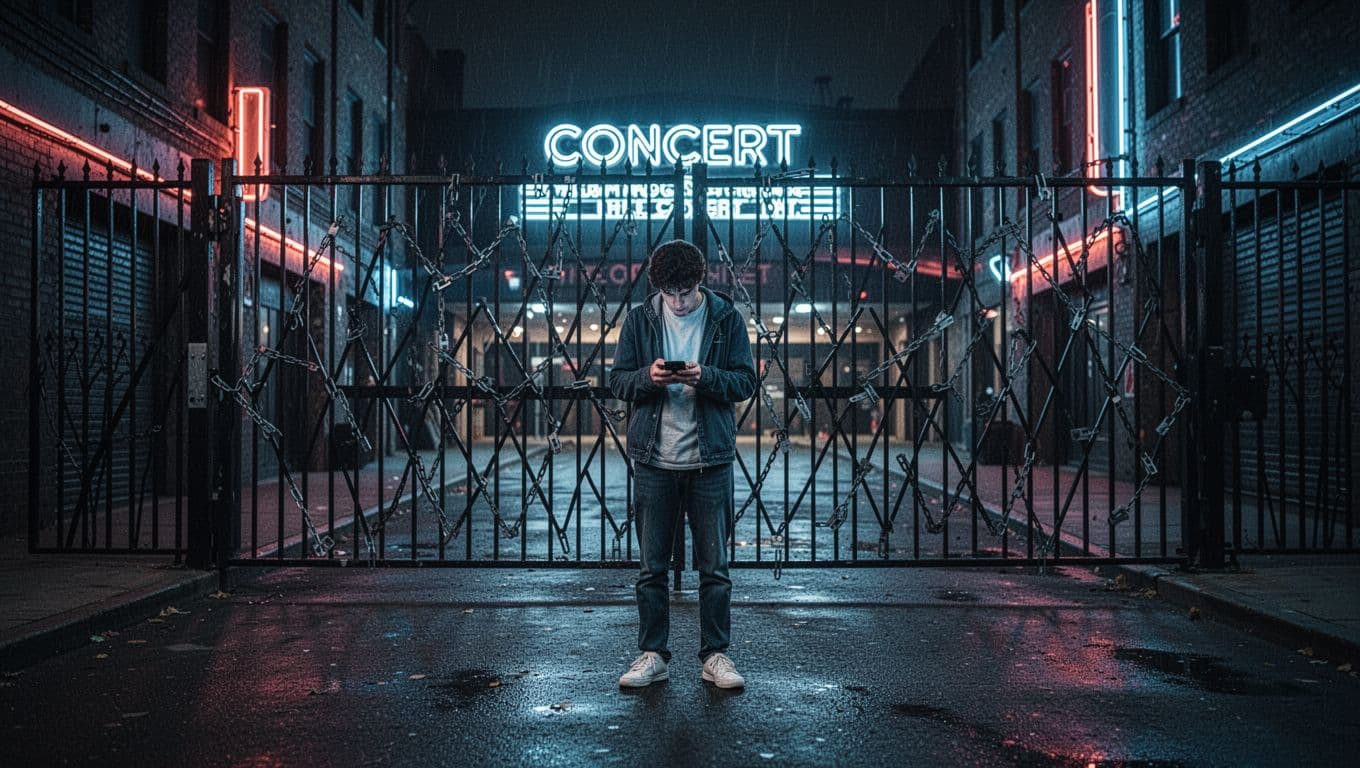
That trend makes sense when you look at how tickets move. Big shows sell out fast, and scammers target the exact moment fans feel desperate. Then bots and fake accounts create listings that look convincing at first glance.
Also, risk changes by season. Winter fraud often spikes for major events like Broadway-style shows and sports. Summer brings its own pressure during festivals and tour legs. Next, the numbers show why you should treat ticket buying like a safety check, not a casual purchase.
The Alarming Stats on Money Lost
When people lose money to ticket scams, it’s rarely a small mistake. It’s usually a full buy, then a dead end at the gate.
Here are some of the clearest figures tied to fake ticket losses:
- In the U.K., overall losses hit £9.7 million in 2024, and complaints rose about 50% year over year.
- In the U.K., losses in gig scams alone reached £1.6 million (2024).
- In the U.S., reported consumer losses topped $12.5 billion in 2024.
- In the U.K., fans lost about £5 million in 2025 (reported).
- In the U.K., one in four event-goers has been scammed.
- In one U.K. fan report, 26% of music fans bought fake tickets via social posts and lost about £258 on average. Many also said they “couldn’t spot” the fakes.
Those numbers help explain the real cost. Even if you only lose a few hundred dollars, you also lose travel plans, time off work, and the show you waited for all year.
And here’s the uncomfortable part. Scammers don’t need everyone to fall for it. They only need enough people to create a steady stream of revenue.
How Bots and Fake Accounts Fuel the Problem
Bots are the reason “sold out” can flip to fake availability almost instantly. Automated tools can hit ticket sites faster than humans, then push listings across multiple pages and accounts.
Recent reporting points to bots making up over 83% of traffic on ticket sites. Even more worrying, a large chunk of that bot traffic relates to scalping behavior. So when you see availability change fast, it may not mean a real restock.
Fake accounts also make scams feel normal. They post “proof” that looks like a screenshot of a screenshot. They claim you can transfer tickets immediately. Then they pressure you to pay before you think.
One widely cited scalping example involved a broker ring using thousands of fake accounts. It grabbed 379,000+ tickets, worth about $57 million for high-demand tours. Some tickets bought for around $45 were reportedly resold for $900+. While not every invalid ticket story matches this scale, the method does: automation first, confusion second, money third.
The FTC has also taken action against ticket resellers tied to illegal tactics. Their case details how resellers bypassed protections while buying huge volumes for resale. See FTC action against ticket resellers for a look at what investigators focus on.
Peak Scam Seasons and Times to Watch
Timing matters as much as the seller. Scammers plan around your emotions.
In the U.K., reporting shows June and July 2024 drove the most cases, with over 1,000 reports in June. That lines up with festival season and tour momentum. When fans are already searching, scammers can blend into the noise.
Winter also tends to bring higher fraud. One report notes fraud can run 80% higher in winter for events like Broadway and sports. That’s when people feel a strong “I have to go” pull.
Then there are time-of-day spikes. Many scams peak during Friday afternoons into the weekend, when people decide to buy quickly. A common pattern is:
- you see a “last chance” listing,
- you get pressured to pay now,
- then the listing disappears or turns into a payment trap.
So if you’re buying for a major event, slow down during the busiest moments. Treat urgency as a red flag, not a sign of opportunity.
Red Flags That Scream Fake or Invalid Tickets
When a ticket scam hits, it rarely shouts “SCAM” out loud. Instead, it hides in details.
Think of fake tickets like a costume. Up close, it can look fine. Up close, it also falls apart fast. Here are the clues that usually show up.
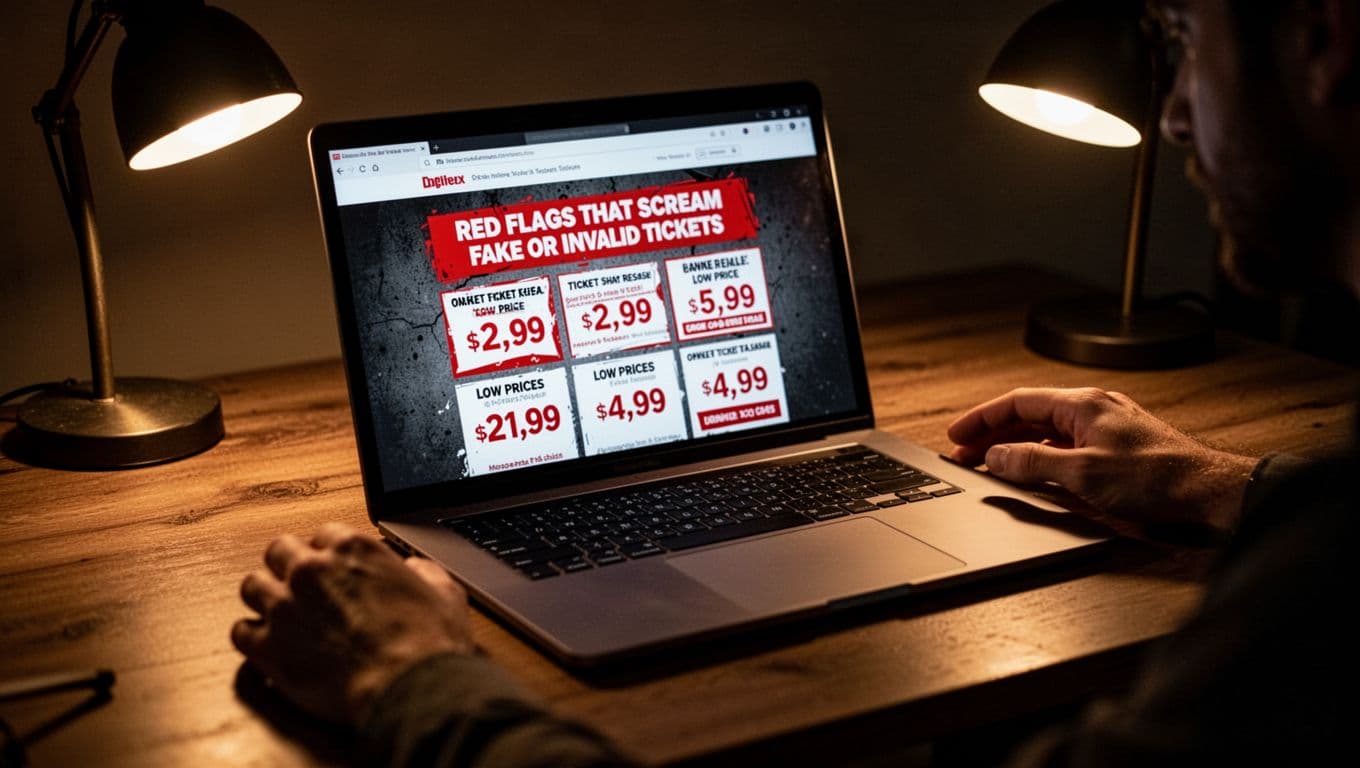
Prices Way Below Face Value
If the price looks too good, it often is.
Scammers undercut because it works. A super-low offer pulls you in while you’re still thinking with excitement. Then you pay, and you get an invalid barcode, a QR code that won’t scan, or a transfer that never happens.
Bots and scalpers also create “fake cheap” patterns. They may list tickets at a low number to trigger quick clicks, then move you into a private chat or another checkout page. Even worse, the price might be mid-range, not rock bottom. Some scams hide behind “reasonable” charges, like $200 to $500, because they blend into your expected budget.
Use a simple rule. Compare the listing price to similar seats on official or authorized resale pages. If it’s far lower without a clear reason (like obstructed view), back away.
Shady Sellers and Websites
Next, check where the ticket is coming from.
Unknown websites and seller pages are a top warning sign. Many scammers use look-alike pages, odd checkout flows, or “support” emails that don’t match the site.
Also watch out for rushed, private selling methods like:
- DMs from accounts with no history,
- meet-up promises,
- “I’ll send the ticket after payment” claims.
A real seller usually has a clear process and a clear paper trail. A scammer tries to cut your time for checks.
When you shop online, look at the address bar too. Use secure pages (you should see https). Avoid pages that ask for random extra info before you can review ticket details.
If you want a trusted baseline, Ticketmaster publishes guidance for safer buying and explains features designed to reduce risk. Their post on Safe & Secure Ticket-Buying Tips is a helpful starting point.
Pushy Sales and Suspicious Payments
Finally, payment behavior gives scammers away.
Real sellers do not need constant pressure. They don’t threaten to remove the deal in 10 minutes. They don’t push you toward hard-to-reverse payment methods.
Watch for these tactics:
- Urgency language that doesn’t match real ticket policies
- Requests for wire transfers
- Requests for crypto payments
- Requests for gift cards
- “Use this payment method or you lose the tickets”
Here’s the bigger issue. You want payment methods that allow disputes. Credit cards usually offer clearer recovery paths than wire transfers or gift cards.
Also be cautious when someone tries to move you off-platform after you click. If they ask you to “confirm” through a new link, stop. Scammers love that moment because it breaks the safety trail.
Proven Ways to Buy Real Tickets Without Worry
You can’t control every scam. But you can control most of your risk.
The goal is simple: buy through channels with rules, audits, and trusted workflows. Then protect yourself with basic habits that scammers count on you to skip.

Go Straight to Trusted Sources
Start with the official path when you can.
For most big events, the safest move is to buy from the venue website or the primary ticket platform listed by the promoter. That reduces the odds of fake barcodes and failed transfers.
Also buy when inventory is real. Use the official on-sale page if possible. When the event first opens, demand is high, but scams haven’t fully flooded every corner yet. As time passes, scam listings spread faster than accurate inventory.
The FTC also publishes practical tips about avoiding ticket scams during major events. Their advice in How to make your World Cup experience scam free is written for fans, and the same mindset works for concerts and sports.
If you must use resale, stick to resale services tied to the original platform, or clearly authorized marketplaces. If a listing requires you to trust a stranger with a DM, that’s a risk you don’t need.
Double-Check Sellers and Ticket Details
Even if the site looks real, details can still betray you.
Before you pay, verify:
- the event name and date,
- the section and row,
- the price compared to similar seats,
- and the ticket delivery method.
If the seller claims “instant transfer,” ask what that means inside their platform. Many issues happen when people think transfer is the same as access.
Then keep your own record. Screenshot the listing, save the confirmation email, and note the order number. If something breaks at the gate, you’ll need proof quickly.
For resale, favor sellers with a clear track record inside the marketplace. Also pay attention to where the tickets come from. If they promise delivery outside normal transfer systems, treat it as a warning.
A useful trick is to check how the tickets are delivered. Some platforms use scannable codes tied to a specific account or transfer window. If you get vague delivery promises, that vagueness is often the scam.
Pick Safe Payments and Habits
Good payment choices can save you when things go wrong.
Use a credit card when you can. It supports disputes more reliably than debit or cash-style payments. Also avoid payment links sent through chat unless they clearly belong to the trusted platform.
Keep habits simple:
- Don’t overshare personal info in messages.
- Change passwords if you entered them on a suspicious site.
- Avoid buying through public Wi-Fi.
- Use strong, unique passwords for email and ticket accounts.
Meanwhile, watch your statements. Mid-range charges around common budgets can hide inside your card history. If you don’t recognize the merchant, investigate right away.
Most importantly, if a seller asks for money using irreversible methods, stop buying. In a fair deal, you don’t need to “work around” the payment rules.
Scammed Anyway? Quick Steps to Get Help
If you think you bought fake or invalid tickets, act fast. Scammers count on slow reporting.
First, contact your payment provider and file a dispute if you paid by card. If you wired money or used a transfer service, call your bank right away. Ask what recovery options exist, even if you think the money is gone.
Next, report the scam. In the U.S., file a report with the FTC at ReportFraud.ftc.gov. In the U.K., report ticket fraud to Ticket scams on Action Fraud.
Then document everything. Save screenshots of the listing, the messages, and the checkout confirmation. Keep emails too. If the tickets fail to scan, note what happened at the gate.
Also consider warning others. Leave an honest review where you found the listing. It won’t undo your loss, but it can reduce repeat victim counts.
The best time to report is before the scammer can disappear completely.
If your tickets were tied to a bot-enabled reseller, it can also fall under rules aimed at ticket limit bypass and deceptive resale tactics. The FTC’s press releases often describe what investigators treat as actionable behavior.
Conclusion
If fake ticket scams have one pattern, it’s this: scammers win when you skip checks. You beat them by buying from trusted sources, spotting red flags early, and protecting your payment.
When prices look strange, sellers get pushy, or payment methods feel off, trust those signals. Then, if you do get scammed, report quickly and document everything.
Next time you hunt tickets, remember the real goal is simple: get in the door. And enjoy the show, without wondering whether your ticket will scan.