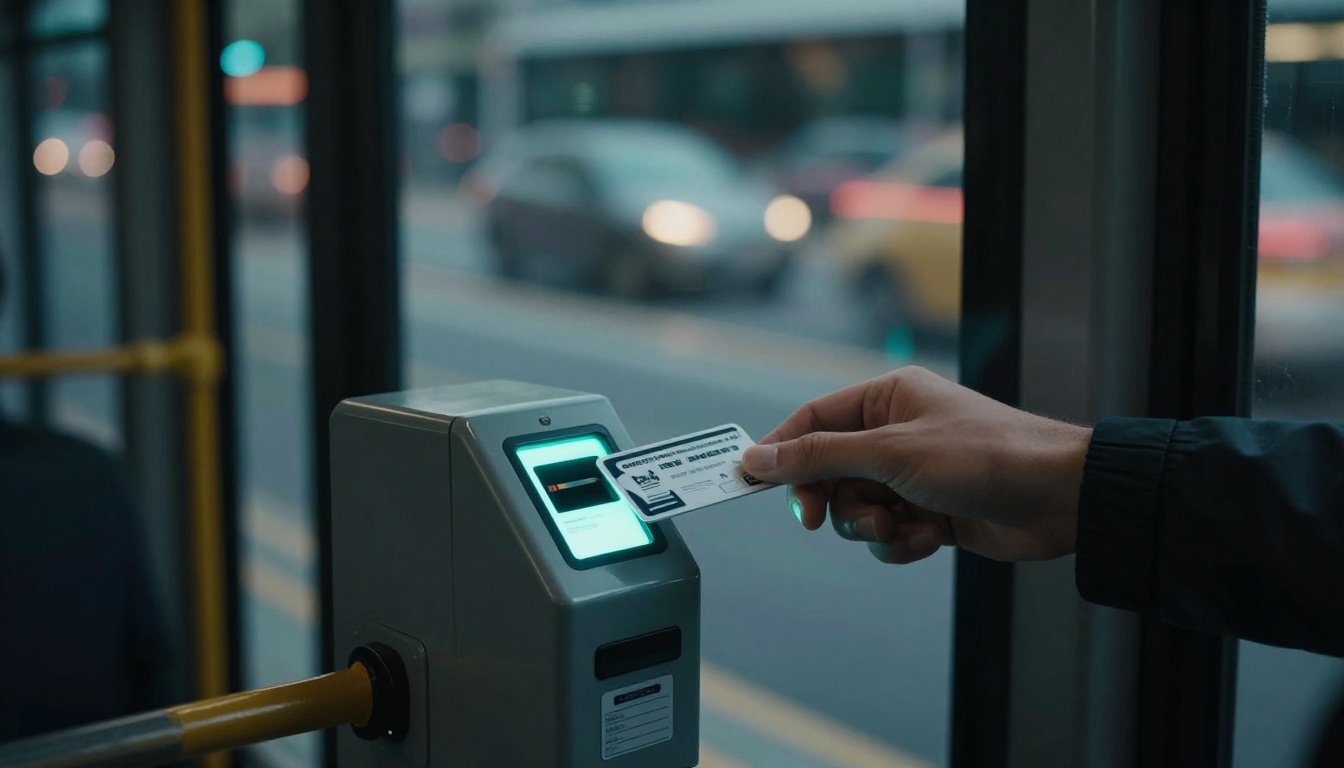
Picture this: you’re late for work, your bus is pulling in, and you reach for your payment card without digging for cash. One tap on the reader, a quick beep, and you’re through. No fumbling, no loose change, no paper tickets.
That’s how contactless cards in transport feel when they work right. Behind the scenes, they use tiny chips and radio signals to check your fare in seconds. In many systems, phones and wearables use the same tap method too.
In the next sections, you’ll learn the basics (what’s inside these cards), then the step-by-step tap process. After that, you’ll see how fare rules work, why the system can stay fair even with daily caps, and what makes the data safer than most people expect. Finally, you’ll get real city examples showing how this tech is playing out in 2026.
Inside Smart Cards and What Makes Them Contactless
A smart card is usually a thin plastic card, but it’s not “just plastic.” It has an embedded chip that stores information and follows security rules. Think of it like a small, disciplined worker. It knows what data it’s allowed to share, and it only shares it in the right way.
Contactless smart cards add one more part: an antenna. The antenna helps the card communicate wirelessly with a reader. When you hold the card near the reader, they exchange data using short-range radio communication, typically in the NFC or RFID family.
Here’s the simple way to picture it.
- With a contactless card, the card “wakes up” when it gets close enough.
- The reader sends power and a request through the radio link.
- The card replies with the right info, usually an ID token plus account details.
Transport systems like these because they cut boarding time. A contactless tap takes a moment, and it works even when you have your hands full.
You’ll also hear about “stored value” and “ticketing.” In stored value systems, your card has a balance. In ticketing systems, your card (or phone wallet) links to an account. Either way, the tap is the front door.
If you want a friendly walkthrough of common contactless ticketing approaches, this guide is a useful reference for the basics of how contactless ticketing systems work: contactless ticketing systems in transit.
Key Differences: Contact vs. Contactless Smart Cards
Not all smart cards behave the same way. Older “contact” smart cards required physical insertion. Contactless cards rely on proximity tapping, which is why they fit public transit rhythms so well.
Below is a quick comparison.
| Feature | Contact Smart Card | Contactless Smart Card |
|---|---|---|
| How you use it | Insert into a slot | Tap near a reader |
| Distance | Close, inside the slot | Usually a few inches (short range) |
| Reader interaction | Electrical contact happens directly | Radio link does the communication |
| Typical transit feel | Slower, more steps | Faster, one motion |
| Common transit match | Older fare gates and kiosks | Modern buses, subways, and gates |
| Where you see it now | Legacy machines | New deployments and upgrades |
Contactless became the default in transport because it reduces friction. It also handles crowd flow better. When lines get long, even small delays add up.
If you want a more technical look at how contactless ticketing worked on London Transport, this IEEE conference paper focuses on contactless smartcard ticketing in that context: prestige-contactless smartcard ticketing on London Transport.
Step by Step: How Tapping Pays Your Transit Fare
The best part about contactless is that you do very little. Still, a lot happens quickly.
Most systems follow this idea, whether you use a card or your phone wallet.
- Approach the reader
You bring the card close. The reader field activates the card. - Tap card or tap phone
You don’t insert the card. You simply tap, then move on. - Card powers up and replies
The card’s chip responds to the reader’s challenge with the proper data. - The reader checks fare rules
The reader and backend systems confirm your account and decide what fare applies. - Fare gets deducted and your balance updates
In many setups, you get an instant confirmation. Your app can update within moments. - If the system uses tap in and tap out
You tap at the start, then tap again when you exit. That pairing helps calculate distance or time.
A big reason taps feel quick is that the card-to-reader exchange only covers a small slice of the full payment job. The system can also support offline operation in places like tunnels, then reconcile data when the reader reconnects later.
If your city uses pay-as-you-go, the fare math still happens behind the curtain. The “tap” is the cue, not the final invoice. Then the backend handles things like daily caps and route rules.
Fare Types and Smart Calculations Behind the Scenes
Transit fares aren’t always flat. Some cities charge per trip, some use zones, and many now mix those ideas with caps.
Here are common fare patterns you may run into:
- Pay-per-trip with daily or weekly caps: You tap each ride, then the system caps what you’ll pay for the day. After you hit the cap, extra taps don’t keep increasing your total.
- Tap-in and tap-out for distance: The system pairs your entry and exit to compute the right fare. It helps keep pricing fair when riders go different distances.
- Prepaid tickets or stored passes: Your card may carry a ticket entitlement. Each tap checks what you’ve already got available.
- Subscriptions linked to an account: You pay monthly, then rides qualify automatically. The tap confirms eligibility.
- Smart fare selection (best-value logic): Some systems choose the cheapest fare type you qualify for on a given day. That means you tap once, and the system picks what benefits you most.
Underneath, route changes and vehicle transfers also matter. Many systems track trip history across buses and trains, then apply fare rules after the fact. The reader acts like the ticket clerk. The backend acts like the accountant.
That’s why a tap can feel instant, but the final “what did I pay?” number may show up in your app a little later. It’s still fast, just not always perfectly synchronized to the beep.
Built-in Security: Why Your Card Data Stays Safe
You might worry about tapping in a crowd. That’s fair. After all, radio waves sound like a thing someone could copy.
In practice, transport systems use multiple layers of protection. A key concept is that it’s hard to copy a secure token from one tap and reuse it elsewhere. The card and reader follow strict rules so the system can reject fake or repeated signals.
Here are the security ideas that matter most for riders:
- Encryption during the tap session: Data sent over the short radio link gets scrambled, so intercepting it is less useful.
- Unique transaction behavior: Many taps rely on changing values per interaction, which makes cloning much harder.
- Tokenization: Instead of exposing your real card number in every tap, the system can use tokens. That reduces the damage if something were intercepted.
- Short-range limits: NFC-style communication is short. Someone across the platform usually can’t easily read or influence the tap.
- Chip authentication: The chip can verify it’s talking to the right reader rules, not a random device.
- No PIN for small fare taps (when allowed): Many systems use tap approval without a PIN for convenience. Larger purchases or special cases may still ask for extra checks.
Also, transport fraud tends to be lower than people fear. Why? Because the system runs at scale, detects odd patterns, and uses strong testing before launch. Plus, a fare gate or validator isn’t a one-off reader. It’s part of a full network with monitoring.
If your main mental model is “safer than cash,” you’re not far off. Tapping shifts the burden from carrying cash to letting the system protect transactions with modern security.
Bottom line: your tap usually sends a protected token, not a readable copy of your full card details.
Contactless Cards Powering Cities Worldwide in 2026
By March 2026, contactless isn’t a bonus feature. It’s the default expectation in many places. Cards, phones, and even some wearables work in the same general way, and cities keep adding more payment options.
In the US, the biggest recent change is how fast systems are moving away from cash-heavy boarding. Real launches show that shift clearly.
For example, Decatur Public Transit (Illinois) launched Decatur Transit Pay in mid-March 2026. Riders can tap reloadable smart cards or use a phone app to pay and manage rides. Cash still works during the switchover, but the direction is clear: less cash handling, faster boarding. The service also tracks rides to help improve bus routes over time.
In Washington, Washington Metro expanded Tap. Ride. Go. to cover parking at stations, including Addison Rd. Riders can pay with contactless credit or debit cards, phones, wearables, and SmartTrip cards. The system applies automatic discounts for rail riders, and it rolls out station by station.
How London, Hong Kong, and NYC Shape Rider Habits
Some cities helped set the template, then improved it over time.
London (Oyster and contactless bank cards)
Oyster remains a major part of daily travel. Riders can use pay-as-you-go with daily fare caps, and contactless bank cards can also be accepted for Tube and bus travel. If you want to check up-to-date practical details like balance checks and basic fare info, this Oyster card guide page is useful: London Oyster Card login and fares.
London’s broader lesson is simple: riders don’t want to learn a new routine every time they ride. Once the tap works across services, people use it without thinking.
Hong Kong (Octopus)
Hong Kong’s Octopus system is known for being multi-purpose. It can act as stored value for transport, and it can also cover payments at retail points and in other settings. For the official “how it works” view, the Octopus user guide explains how to place the card on the reader and how stored value works: Octopus User Guide.
New York City (OMNY)
NYC’s OMNY system was built for tap-and-go across subways and buses, which means riders can use a contactless card or phone instead of relying on older paper and swipe ticket routines. For a snapshot of the shift from MetroCard to OMNY and the transition timeline, see this report: NYC Transit Goes Contactless as OMNY Replaces MetroCard.
Why phone taps keep growing in 2026
One more trend stands out: phone-first travel. Many riders already carry a phone with a wallet app. So transport systems treat phones as just another “tap” device. That’s why you’ll see contactless readers accept cards and wallets at the same gates.
As phone use rises, cities still keep smart cards for people who prefer them. That mix matters because transit must work for everyone, not only for the most tech-heavy riders.
Conclusion: Ready to Tap and Go?
Contactless and smart cards work because they’re built for fast, reliable payment at scale. A small chip and antenna handle the radio tap. Then the system applies the fare rules behind the scenes, including caps and tap-in/tap-out logic.
Security also plays a major role. Encryption, short-range communication, and token-based approaches help keep your data safer than most people expect, especially compared to cash.
Now think about your next ride. Will you use a card, your phone, or both? Either way, once you understand the tap flow, the system feels less like a mystery and more like a routine you can count on.
Ready to tap and go? Share what your city uses in the comments, and if you want more practical transit tips, keep following along for the next upgrade story.