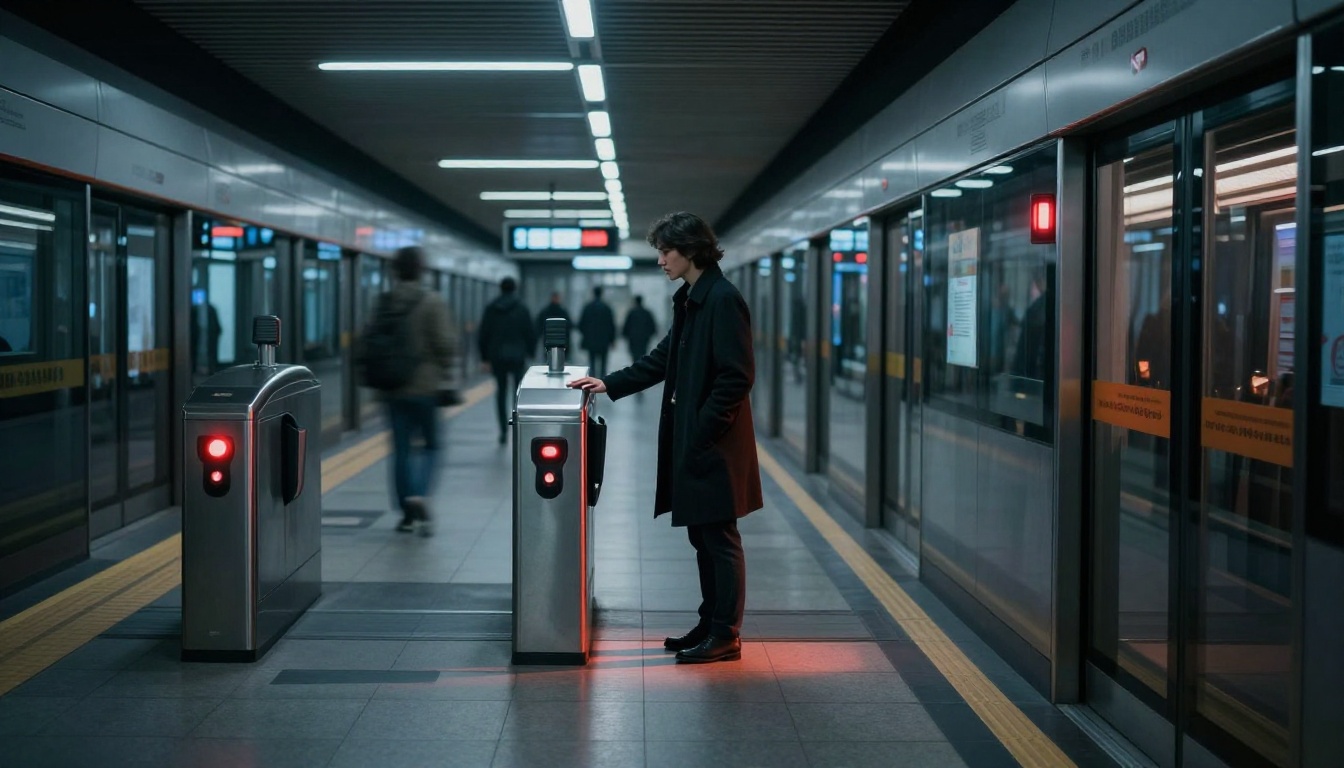
Missing your ticket can feel like a small mistake. Then a staff member or agent appears, and suddenly it’s not small anymore. When you travel without a valid ticket, transit systems treat it as fare evasion, and the fallout can be fast.
Depending on where you ride, you might get stopped, forced off, or hit with a civil fine you have to pay later. In repeat cases, some places can escalate to criminal charges or arrests. That risk exists on subways and buses, and it can also show up in air travel through airline contract penalties.
The good news is this: you can avoid most problems with a few simple habits. Here’s what typically happens right away, what it costs in different countries and transit types, and how to make sure you never have to deal with the stress again.
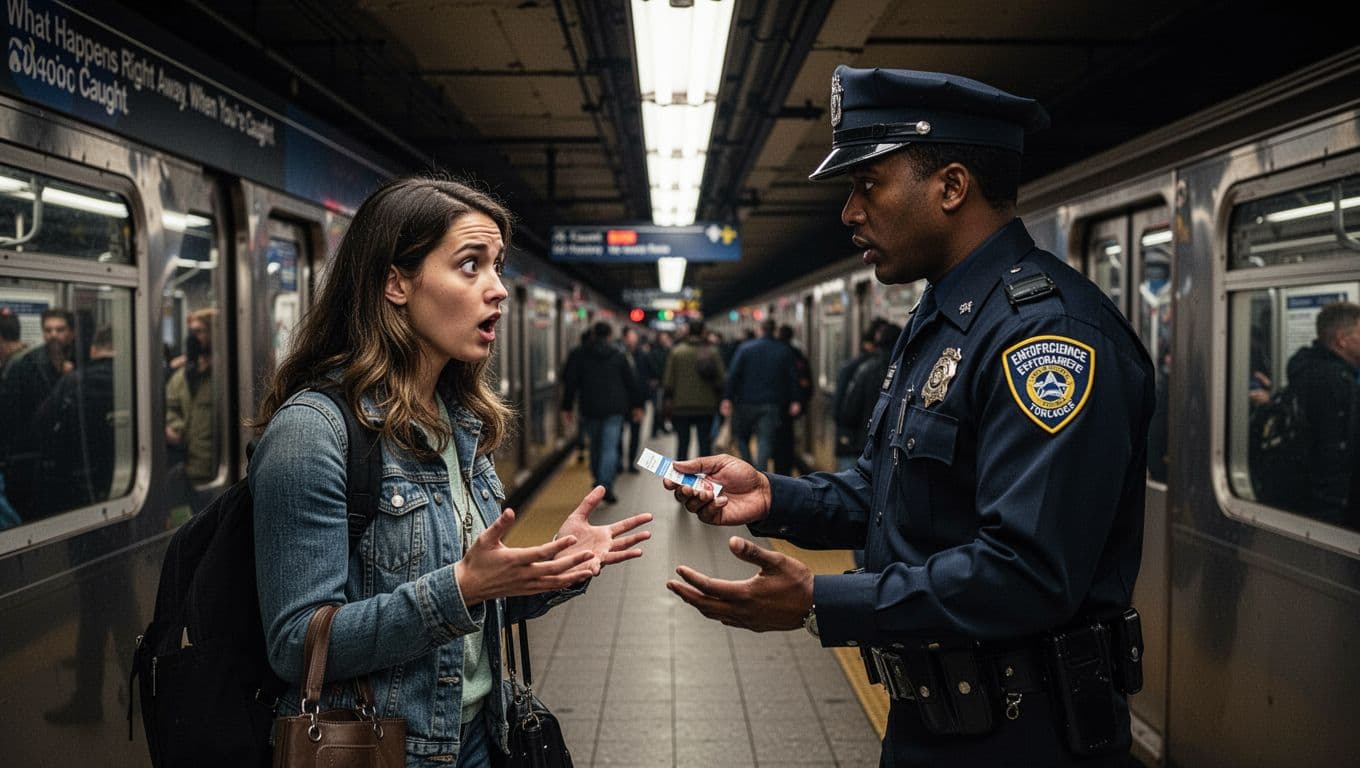
What Happens Right Away When You’re Caught (Fare Evasion Fallout)
The moment you board without a valid ticket, your “plan” can vanish. Usually, you’ll get noticed during a proof-of-payment check, at a fare gate, or because an agent is watching for unpaid riders.
In the US, transit enforcement often works like this: an agent asks for your fare, checks your proof (or your card balance), and then decides next steps on the spot. If you can’t show proof, they may issue a notice, then tell you to exit the vehicle or go to a specified area for processing.
This is where your timing matters. If you ride at busy times, enforcement can move quickly. Even if you mean no harm, you can still end up delayed.
For a real US example, the New York City MTA and NYPD have kept strong enforcement through recent years. Through 2024, fare evasion in subways dropped 26% from June to December 2024. NYPD issued 143,100 summonses for subway fare evasion in 2024, up 96% from 2019. On buses, evasion dropped from 48% to 44% through 2024, and bus evasion fell 9.1% from June to December 2024.
Even though evasion trends have improved, enforcement stayed active. MTA and NYPD added more staff at stations and buses, including a Bus Enforcement Unit and MTA’s EAGLE Team. New fare gates also went into about 20 busy stations, and anti-evasion fixes continued across turnstiles.
So what do you feel in the moment? Usually, it’s embarrassment, frustration, and pressure. You might worry you’ll be called out in front of everyone. You might also worry about missing your stop.
Now here’s the part people don’t expect: you can get a notice even if you “intended to buy later.” Transit staff typically don’t run on intention. They enforce rules based on payment.
If you’re caught, don’t argue the rules. Ask what you need to do next, then follow instructions.
In many systems, “denied boarding” or forced exit is possible. That can happen mid-trip, especially on buses where agents can require riders to step off and process the situation immediately. On trains and subways, you might get moved to a staff area or be told to exit at the next stop.
As you can see, the first fallout is usually personal and immediate: you lose time, you feel exposed, and you end up facing a formal penalty process.
On Trains and Subways
Train and subway enforcement varies by country, but the pattern is similar: no ticket means no entry, or no entry proof means a penalty later.
In the US, systems commonly use civil citations or notices that lead to fines. For example, WMATA reported 21,841 citations in 2025, and bus citations rose 184%. Many first-offense transit fines in the US fall in the $50 to $100 range, then rise for repeats or court actions. In other cities, the base fine can be higher, and repeat cases can bring tougher outcomes.
In Europe, penalties often have more “set” pricing. In Germany, the fixed fine for traveling without a ticket is €60, and it’s often handled on the spot. In France, there’s typically a base fine around €50, plus the ticket cost, and it can rise to €100+ when unpaid. In the UK, Transport for London (TfL) uses a Penalty Fare of £80, reduced to £40 if you pay within 14 days.
If you’re thinking, “I’ll just buy at the next station,” the safest answer is no. Across many networks, that doesn’t stop enforcement from happening.
Also, some systems keep pushing higher penalty fares to reduce fare evasion. TfL, for instance, announced higher penalty fares on its services to reduce fare evasion and make penalties more consistent across transport networks (see TfL’s higher penalty fares announcement).
Buses and Local Transit
Buses are often where things feel the most tense, because the “proof check” can happen right after you sit down. If you can’t show payment, agents may require you to get off the vehicle. In practice, that means delays for you and everyone around you.
In NYC, enforcement plans have aimed at catching riders on both subways and buses. MTA has worked with NYPD and expanded checks in multiple boroughs, plus added dedicated bus enforcement resources. If you’re riding with a card that’s empty, a pass that expired, or no proof at all, you can be singled out quickly.
Outside the US, bus penalties can still be steep, especially where enforcement is strict and payment systems rely on quick checks. Australia is a good example of how “no ticket” can turn expensive fast. Many riders use contactless taps or stored-value cards, and if you don’t have valid payment, fines can jump to the $350+ range on some networks (like systems using Opal in Sydney).
If you want context on how transit fines affect riders in Victoria (Australia), the Public Transport Users Association is a useful place to see passenger perspectives on enforcement and fare policy.
The main takeaway for buses is simple: the penalty is not only about money. It’s about being pulled into the enforcement process in public, then dealing with the paperwork or payment steps after.
The Real Cost: Fines and Legal Penalties Worldwide
When you ride without a valid ticket, the “cost” can show up in more than one way. There’s the fine itself. Then there’s time spent dealing with the citation. After that, repeat offenses can raise the risk of court involvement.
Here’s a quick, practical snapshot of what people typically face across major regions.
| Location or transport type | Typical penalty outcome | What can happen next | Notes |
|---|---|---|---|
| United States (varies by agency) | Civil fine or citation (often $50 to $100 first on some systems) | Higher fines, court for repeats in some places | WMATA reported higher citations in 2025; MTA uses TAB notices that lead to penalties |
| United States (BART, LIRR style rules) | Often $100+ or starts around $100 | Court or tougher enforcement for repeats | Amounts vary by system and case |
| UK (TfL) trains and buses | £80 Penalty Fare (reduced to £40 if paid in 14 days) | Further action if unpaid | TfL uses formal penalty fares |
| Germany (trains, subways, many cities) | Fixed €60 fine | Payment required; repeats increase consequences | On-the-spot handling is common |
| France (SNCF, metro systems) | Base €50 plus ticket cost; can rise €100+ | Increased penalties for unpaid or repeat cases | Checks are strict on rail networks |
| Australia (Opal/Myki-type systems) | Often $350+ | More action for repeats or unpaid fines | Contactless systems still enforce strict penalties |
| India (metro systems) | Often ₹500 to ₹1,000 (varies) | Repeat cases can escalate by operator | Enforcement depends on city and operator |
| Planes (airlines) | Less about public fines, more about airline rules | Contract penalties, rebooking rules, bans possible | No-ticket issues are handled under airline policy |
Amounts vary, and your exact case depends on local rules. Still, one pattern repeats: if you don’t pay, the problem doesn’t go away.
Differences Across Countries (Civil vs. Court Risk)
In the US, most first-time fare evasion issues are handled as civil penalties. That means you typically get a citation or notice, then you pay (or appeal). However, repeats or “bad cases” can lead to criminal summonses or arrests in some cities.
In Europe, penalties are often more “standardized.” Germany’s fixed €60 approach, and the UK’s £80 Penalty Fare, make outcomes easier to predict. France often adds ticket costs on top of the fine. Because enforcement is frequent, you can’t count on a warning.
In Australia, enforcement can be strict and penalties can be high for no-payment riders. In India, penalties for metro fare evasion are often lower in dollar terms, but they can still be serious depending on local operator rules and repeat behavior.
Planes are different. Airlines usually handle this through their own contract rules, and issues can lead to rebooking fees or bans. You’re much less likely to face a “walk of shame” like on a bus, but you still risk money loss and future restrictions.
Repeat Offenders Face Harsher Punishments
The safest assumption is this: the system remembers repeat behavior.
On transit networks with active enforcement, the first incident might feel “handled.” But the second incident often triggers stronger steps. That can mean higher penalties, court referrals, or more direct involvement from police in some places.
In NYC, repeat or serious cases can escalate beyond a civil TAB summons. MTA and NYPD have said they increased enforcement efforts because fare evasion drains transit revenue. In fact, MTA reported losing $690 million in 2022 due to evasion, which is one reason these checks stay aggressive.
So if you’re tempted to think “one time won’t matter,” that’s exactly how people get pulled into bigger trouble later.
Long-Term Risks and Smarter Ways to Travel
Now let’s talk about the part that hits after you leave the station. Even if you pay the fine, fare evasion can follow you in ways you might not expect.
First, there’s the simple cost. Fines can stack with late fees or follow-up actions if you don’t respond. Next, there’s the time cost. Appeals and payment processing can take days or weeks. Finally, repeat cases can create legal headaches, including records that may matter for background checks in some situations.
The real win is preventing the situation before anyone asks for proof.
The best solution is also the easiest: don’t let “I’ll fix it later” become a habit.
Building Good Habits to Dodge Fines Forever
Use routines that keep you covered even when you’re rushing.
- Set a quick reminder before you leave. A phone alert can nudge you to check your transit wallet or card balance.
- Use auto-load where it’s offered. When your card tops up automatically, you avoid the empty-balance surprise.
- Keep proof where you can grab it fast. If your system uses a proof-of-payment method, store receipts or confirmations so you can show them quickly.
- If you realize you’re short, address it immediately. Ask staff how to buy the correct fare at the moment you notice.
In NYC, for example, MTA’s Transit Adjudication Bureau (TAB) processes Notices of Violation for fare-related conduct and also runs an appeals process (see MTA’s Transit Adjudication Bureau report). That means mistakes can sometimes be challenged, but you still have to handle the paperwork.
Finally, if you’re traveling in a new city, check that system’s ticket rules before you board. “Valid ticket” can mean different things in different places, especially where proof-of-payment rules apply.
Ready to travel stress-free? Make your payment routine automatic, and you’ll protect both your schedule and your wallet.
Conclusion: The Fastest Way Out of Trouble Is Paying First
When you travel without a valid ticket, the first hit is usually immediate: agents ask for proof, you get delayed, and you may get forced off the vehicle. Then comes the real cost, which can range from civil fines to court involvement in repeat cases.
As enforcement ramps up, especially in places like NYC, it’s smarter to treat fare payment like you treat your keys. You don’t want to gamble on whether it’ll “work out.”
So the next time you rush for a train or bus, pause for one second and confirm your ticket is valid. Then go.