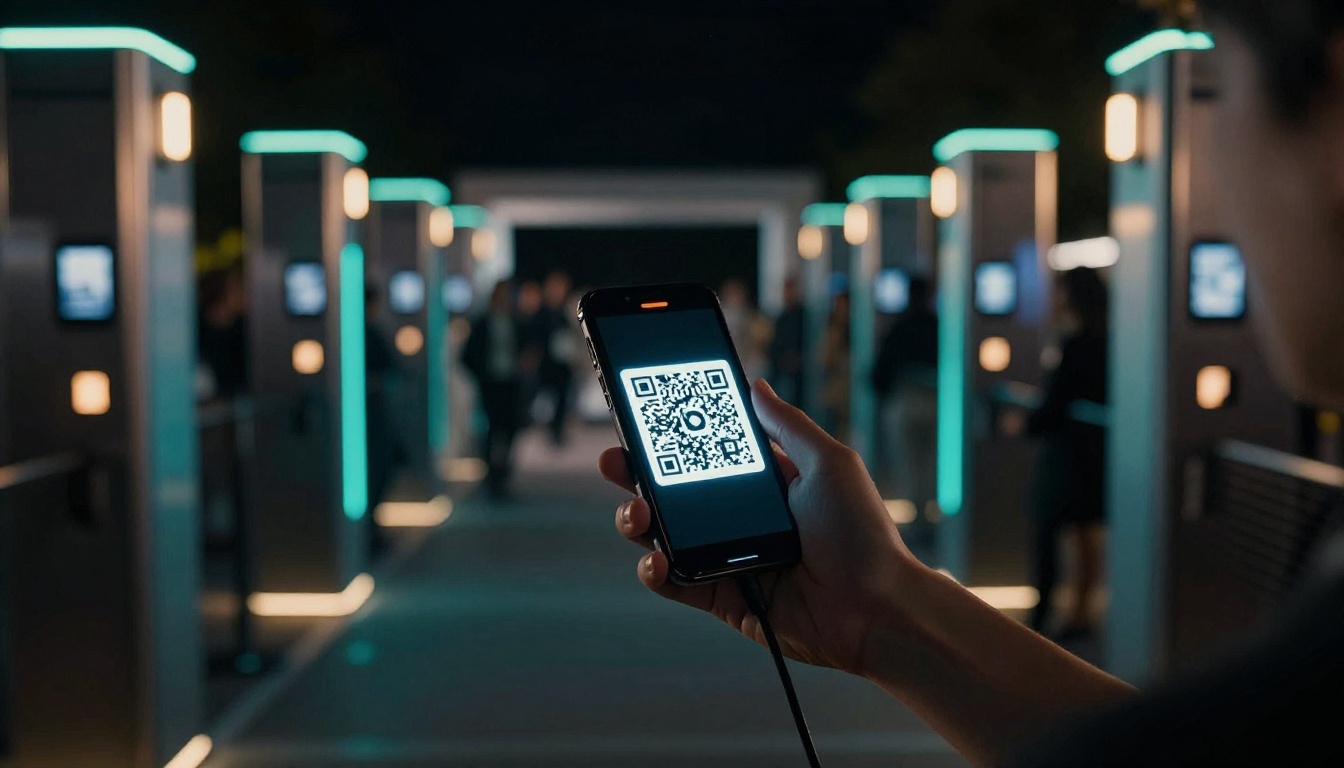
You’ve felt it before. Lines crawl, someone argues about a seat, and a staff member squints at a barcode. Then you hear it, “We have to verify that ticket.”
Real-time ticket validation is a system that checks a ticket instantly to confirm it’s real, unused, and matches the holder. In 2026, it matters more than ever because scams spread fast and events sell out even faster.
Instead of slow “maybe” checks, modern gates can give a clear go or stop in seconds. That means faster entry, fewer fake tickets, and less stress for everyone. Next, you’ll see how it works, what happens when it fails, and which technologies make it possible.
How Does Real-Time Ticket Validation Actually Work?
Think of real-time ticket validation like a quick bouncer at the door. It doesn’t guess. It checks key details right now, based on what the ticket system already knows.
Here’s the simple flow most venues use:
- Show the ticket via a phone app, QR code, NFC tap, or sometimes a face scan.
- Scan or read instantly at the gate or validator.
- Ping a secure system that stores the ticket rules and status. It checks validity, whether it’s already used, and whether the ticket matches the right person or device.
- Get an instant result. Green light or a beep usually means entry. Red means stop and staff steps in.
All of this happens in seconds, because the gate connects to a ticket database designed for fast responses. If your ticket is legit and available, the system flips the status to “used.” If something looks off, it blocks access before a copy can slip through.
For example, at a concert entrance, you might hold your phone up to a scanner. The device reads the code, then verifies it right away. In modern setups, the code might not even stay the same for long, which helps block screenshots and copied barcodes.
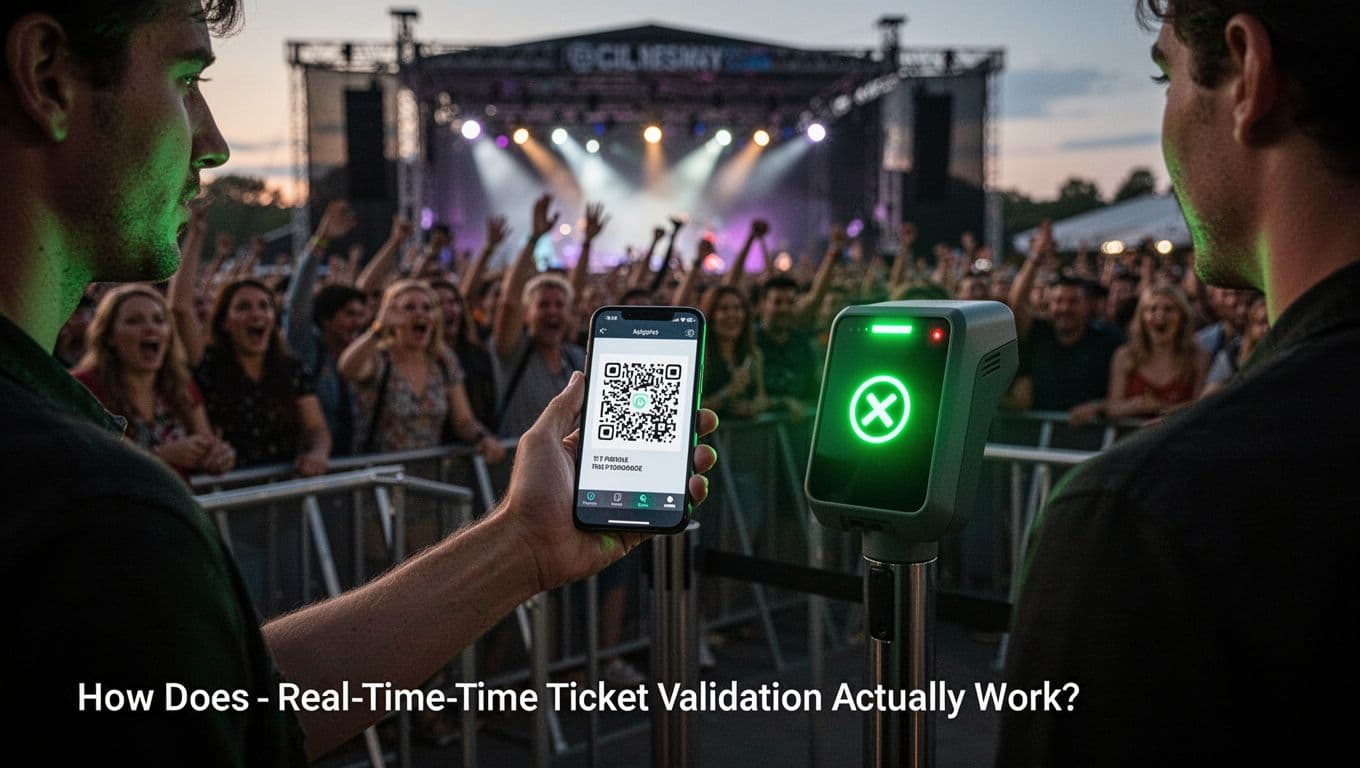
In plain terms, real-time ticket validation turns “trust me” into “verified now.” And because it marks tickets as used immediately, it prevents the same ticket from entering twice.
The Step-by-Step Scan Process
From your point of view, it feels easy. Still, there’s a lot happening behind the scenes. Here’s what usually matters at the gate:
- You present the ticket on your phone, smartwatch, or card (or you stand where the face scan camera can see you).
- The reader captures the info (barcode, QR, NFC chip signal, or face match data).
- The validator sends a request to a secure ticket service.
- The service checks three things fast:
- Is this ticket valid for this event or route?
- Has it already been used?
- Does it match the allowed holder or device?
- The system responds instantly so the gate can allow entry or stop it.
One more detail that really helps in 2026: many systems use dynamic codes. That means the QR code or barcode can refresh every so often. As a result, a copied image from your friend’s phone won’t work at the exact time you try to enter.
What Happens If a Ticket Fails the Check?
A failed check doesn’t always mean “scammer.” It can also mean your phone lost service, your code expired, or your account info didn’t sync.
Still, the system usually flags a few common problems:
- Fake ticket patterns (data doesn’t match what was issued)
- Duplicate use (already marked as used)
- Owner mismatch (ticket linked to a different account or device)
- Expired or stale code (dynamic ticket didn’t refresh for the current entry window)
When that happens, gates typically do one of two things. Sometimes the reader simply turns red and staff investigates. Other systems can auto-block and then request manual review.
The key point is fairness. Real-time ticket validation aims to stop fraud without turning entry into a guessing game. If you get stopped, staff can usually confirm your purchase status and help you get in the right way.
The best systems block duplicates and fakes while keeping the process quick for real fans and riders.
Key Technologies Making It Possible in 2026
Real-time ticket validation isn’t one gadget. It’s a team of tools working together. When those tools work well, you get quick scans and fewer fraud attempts.
In 2026, these tech pieces show up again and again:
- Dynamic QR codes that refresh, so screenshots lose value fast.
- NFC tap-to-validate for phones and contactless cards.
- Biometrics like face checks (in some venues and higher-touch lanes).
- AI fraud spotting to flag suspicious patterns and reduce risk.
- Cloud-based or fast-synced databases so scanners can confirm status in real time.
Also, more systems can keep working during outages. For example, some validator setups can store a list of valid items locally, then sync later if the network drops. That matters on event nights, when Wi-Fi can get overloaded.
If you want a venue-level example of how secure ticketing can work, Ticketmaster describes its SafeTix approach as encrypted digital ticketing designed for trusted entry, including dynamically refreshing barcodes. You can read more about that here: Encrypted ticketing with SafeTix.
Dynamic QR Codes and NFC: The Fraud-Proof Stars
Older ticket tech used static codes. Once someone screenshots your QR code, it can stay “valid” long enough to cause trouble.
Now, many systems use dynamic QR codes. The code can refresh every short window (often tens of seconds). So even if someone tries to copy it, the code at the scanner won’t match at the moment of entry.
Meanwhile, NFC aims for even less friction. Instead of aiming your camera, you tap. Your phone or card sends a signal to the reader. Then the validator checks your ticket status right away.
In practice, that means:
- Less fiddling at the gate
- Fewer scanning errors from screen glare
- Faster throughput when crowds surge
There’s also a transit angle. Contactless validation relies on the same “tap and confirm” idea, even when schedules and route systems change.
For background on how mobile ticketing shifted in public transit, HID Global discusses the role of contactless tech like NFC and related approaches in this overview: Mobile ticketing in public transit.
Many transit systems also want to handle high volumes quickly. That’s why they invest in validators that can read common formats fast.
Biometrics and AI: Smarter, Safer Scans
When you hear “real-time ticket validation,” you might think only of QR codes. But in 2026, some events add face verification at entry.
Here’s the simple idea. A camera captures your face, compares it to the ticket-holder match, then grants or denies entry. In some setups, the system can work hands-free, so you don’t hold your phone up at all.
Face checks can help stop bots and scalper setups that try to buy tickets in bulk. Still, the strongest benefits show up when face verification runs with ticket status checks.
AI also helps behind the scenes. It can spot odd buying patterns, suspicious account behavior, or unusual entry attempts. Then staff can focus only on the cases that need human review.
Privacy also comes up a lot. Good vendors treat biometric data carefully and limit access. Policies and design choices matter, so it helps to ask what’s stored and why.
If you want an example of how real-time identity checks get positioned for ticketing, Didit shares details on secure contactless ticketing and real-time verification here: Didit real-time verification.
For another perspective on face-based verification, Piktical describes an app-based identity check flow that uses facial recognition to verify a real person during ticket interactions. See: Piktical facial check.
Top Benefits That Save Time, Money, and Headaches
Real-time ticket validation isn’t just “cool tech.” It changes the day for you. It also helps organizers protect revenue and reduce chaos.
Most benefits fall into two buckets: better for attendees, better for operators.
Faster Entry for Fans and Riders
When validation happens instantly, lines move. Even small savings add up when thousands arrive at once.
Here’s what improves in real life:
- Less waiting at the gate because scans are quick
- Fewer repeat attempts since the system checks validity immediately
- Fewer seat and ticket disputes because status updates happen fast
- Better crowd flow when gates clearly show go or stop
If you’ve ever watched a manual check turn into a debate, you know how much time that takes. Real-time systems reduce the “maybe” moments.
Also, many modern tickets include dynamic elements. That means the scanner can confirm the right ticket at the right time. As a result, staff spend less time explaining and more time helping.
On transit, the same effect shows up when people tap and go. Validation becomes part of the ride rhythm, instead of a separate slowdown.
Stronger Protection Against Scalpers and Fakes
Fraud costs money. It also hurts legitimate fans. Real-time validation fights both.
Dynamic codes and real-time status checks can block common scam methods like:
- Sharing screenshots of “working” tickets
- Copying barcodes after someone enters
- Reusing the same ticket for multiple people
- Using fake tickets that look close but don’t match records
Because validation marks tickets as used immediately, the same ticket can’t enter again. And because the system checks holder match (in some setups), it blocks some transfer scams too.
For operators, that means fewer lost tickets and fewer refunds from entry failures. Just as important, it builds trust. When fans expect smooth entry, they feel more confident buying and showing up.
Real-World Use Cases and Examples You Can See Today
You can spot real-time ticket validation in more places than you think. It’s not limited to big arenas.
It shows up in events, sports, and public transit. Some ticketing systems also support B2B IT use cases, like verifying access to events or training.
At Concerts and Sports Games
At a packed venue, your phone becomes your ticket. You scan. You pass. That’s the promise.
For Ticketmaster specifically, its SafeTix materials describe encrypted digital ticketing built for secure fan experiences, with features designed to help prevent fraud and support trusted entry. If you want to see how they talk about event day scanning and related entry features, this page is a good starting point: Event day entry with SafeTix.
You might also see guidance in help resources, especially around how tickets work on mobile. Parkhub’s help article includes details about Ticketmaster SafeTix and entry expectations: Ticketmaster SafeTix details.
Even if you never read it, that kind of support matters. It helps ensure tickets sync correctly before gates scan.
On event nights, you can also notice the difference between old and new systems. Newer gates give clear feedback. Staff handle exceptions faster. That reduces the “standing around” time that turns into late arrivals and missed moments.
On Buses, Trains, and Public Transit
Transit has its own ticket problems. People share passes. Networks can get crowded. Validation must work at scale.
Many validators handle QR codes, barcodes, and contactless systems. HID Global talks about mass transit validation with devices that can process multiple ticket types and work in real-world conditions.
For a concrete example, HID announced its VAL150 validator for mass transit and fare collection. It describes handling different formats and integrating into transit environments here: HID VAL150 ticket validator.
What this means for riders is simple. Tap the validator. It checks your ticket or fare. Then the gate allows you through or flags an issue for inspection.
In addition, transit systems care about uptime. So offline or delayed syncing options matter. The system can still validate enough to keep flow moving, then update later.
Challenges to Watch and Exciting Trends Ahead
Real-time ticket validation works best when it balances speed, accuracy, and user trust. Still, no system is perfect.
Several challenges show up often:
- Network reliance (when Wi-Fi fails, checks can slow)
- Privacy concerns (especially with biometrics)
- Legacy venues (older gates may not support new formats)
- User friction (battery dead phones and low brightness screens)
The good news is that vendors keep improving. Also, solutions are getting more flexible.
Common Hurdles and How They’re Being Fixed
Internet hiccups can happen on event nights. That’s why many systems now include ways to reduce failure.
Some approaches include:
- Offline-friendly validation (local caches of valid items)
- Fallback scan modes (alternate code types when one fails)
- Better ticket syncing before gates open
- More staff tools to resolve exceptions quickly
If you’ve ever tried scanning a QR code with glare, you already know why physical readability matters. NFC tap reduces those issues for many people.
Meanwhile, privacy needs clear boundaries. Face checks and other biometrics only make sense when policies protect people and data is used responsibly. Expect more transparency and stronger controls as deployments grow.
What’s New: AI Advances and Wallet Integration
As of March 2026, real-time validation is shifting toward faster, more automated checks. Reports on current trends highlight facial recognition gates, RFID wristbands, and NFC-based ticketing that can validate people in seconds instead of minutes.
It’s not only about entry anymore. Tickets are becoming tied to identity and access rules. Some systems can adjust checks based on risk signals. For example, they may speed up normal entries but request extra review when patterns look unusual.
Wallet integration also matters. Phones already store cards, IDs, and passes. The more tickets connect to those systems, the fewer separate apps and passwords you need.
In the next few years, expect more cross-venue experiences. People may be able to use one flow across multiple partners. That reduces the “new app anxiety” that happens every time a venue changes providers.
Conclusion: Real-Time Ticket Validation Makes Entry Safer and Faster
Real-time ticket validation is a system that checks a ticket instantly to confirm it’s real, unused, and matched to the allowed holder. It works by scanning your ticket, confirming status in a secure system, and then giving a clear go or stop response.
In 2026, key technologies like dynamic QR codes, NFC taps, biometrics, and AI fraud checks help keep lines moving while reducing fake ticket attempts. You can also see these ideas in the way major vendors describe their platforms, like SafeTix and modern transit validators.
Ready to see it in action? Use the venue app, keep your phone charged, and watch for NFC upgrades at gates. After all, real-time ticket validation is turning entry into a quick check, not a tense moment.